Global sourcing of USB-C adapters is no longer a simple plug-and-play exercise. Canalys reported that worldwide PC shipments reached about 255.5 million units in 2024. Counterpoint Research also recorded approximately 1.22 billion smartphone shipments that year. These figures show a broad, growing need for reliable charging and data accessories.
The right Adapter Usbc must match voltage, current, protocol, port layout, and regional requirements. USB-IF’s USB Power Delivery 3.1 specification supports power levels up to 240 watts. However, advertised wattage does not guarantee equal performance. Buyers should verify certification, cable compatibility, thermal protection, and load testing records. A small label can hide a major sourcing risk.
The European Union’s Common Charger Directive now requires USB-C charging for many devices. Its laptop requirement begins on April 28, 2026. Other markets may apply different safety, labeling, and efficiency rules. That makes compliance evidence essential. Request test reports, declarations, factory audit records, and traceable component details before negotiating price.
Details matter.
A supplier may offer an attractive unit cost. Yet, inconsistent connector plating can cause intermittent charging after repeated use. In practice, samples should face bending, insertion, heat, and full-load tests. No checklist is perfect. Even experienced buyers can overlook regional plug differences or unsupported fast-charging protocols. A more reliable process combines standards research, laboratory verification, supplier experience, and transparent documentation. This approach reduces returns, protects brand credibility, and creates a stronger basis for global purchasing decisions.
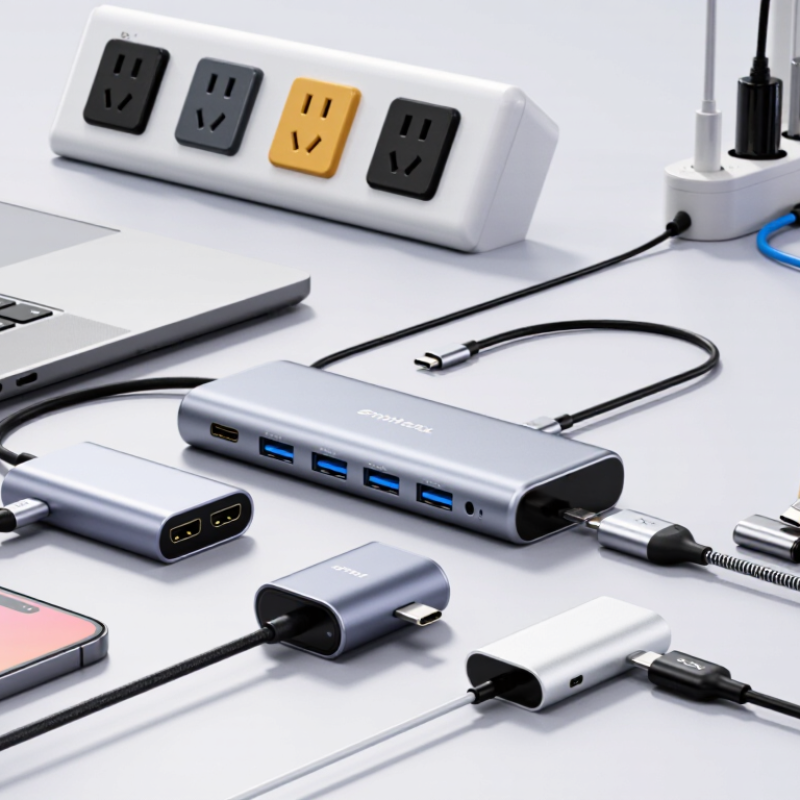
Global sourcing starts with a precise USB-C adapter requirement, not a product photo. List every target device, port type, charging power, data speed, plug format, and destination market. A laptop may need 100W power delivery, while a phone adapter may need far less. Confirm whether video output, Ethernet, memory cards, or multi-port charging are required.
Market scale increases the cost of vague specifications. IDC reported approximately 1.23 billion smartphones shipped worldwide in 2024. Meanwhile, the European Commission requires USB-C charging support for many portable devices sold in the European Union. Laptop requirements also apply from April 2026. These changes make regional compliance and device compatibility essential. Ask suppliers for test reports, protection features, thermal results, and samples from different production batches. A certificate alone is not enough.
Tips: Build a requirement sheet before requesting quotations. Separate must-have features from optional features. Test with real cables and devices. Check idle heat after several hours. Small details matter.
A common sourcing mistake is selecting wattage first. That approach can miss cable limits, charging protocols, or plug safety requirements. I would also question unusually low prices. They may reflect shorter testing or weaker components, but this needs verification. Compare samples, inspection records, warranty terms, and factory capacity. The 2024 global smartphone shipment data from IDC shows the scale of potential demand, yet volume forecasts do not guarantee adapter success. Your actual device mix still decides the specification.
Power, data, video, and port specifications must match the end user’s workflow. USB-IF states that USB Power Delivery 3.1 can support up to 240W, but the adapter, cable, and device must all support the same profile. A 100W label alone proves little. Check input voltage, output current, thermal protection, and whether power is shared across ports. In real sourcing projects, a compact adapter may become hot when charging a laptop and phone together. That detail is easy to miss.
Data speed also needs careful reading. USB-IF specifications define USB4 performance up to 40Gbps, with newer revisions reaching higher rates under specific conditions. Video output depends on DisplayPort Alt Mode, resolution, refresh rate, and lane allocation. A port marked “USB-C” does not automatically support video. Market research from Grand View Research describes strong growth in the USB Type-C market, driven by device convergence and faster connectivity. Growth creates more choices, not fewer testing problems.
Tips: Request a full port matrix from suppliers. Record each port’s wattage, data rate, and video limit. Test a loaded adapter with real cables, not only laboratory equipment. Compare certification documents, sample results, and failure rates. I would also question unclear claims such as “8K ready.” They may be technically possible, but not practical at every refresh rate. A second sample test is slower, yet often cheaper than correcting a shipment.
When choosing a USB-C adapter for global sourcing, begin with the destination market. USB-C describes the connector, not the wall plug or electrical system. Check the local voltage, frequency, plug shape, and grounding requirements. A compact adapter may fit physically but still be unsuitable electrically.
Safety certification must match the selling region. Request current test reports, certification numbers, and clear product markings from the supplier. Verify protection against overcurrent, overheating, short circuits, and unstable voltage. Certification symbols should appear on the adapter and packaging, not only in a supplier’s presentation. I once overlooked the difference between a regional approval and a broader safety claim. That mistake delayed sampling and required extra document checks.
Tips: Compare the adapter with official regional requirements before placing a large order. Inspect samples under load, not only during visual checks. Test USB-C output stability, temperature, cable fit, and charging behavior with several devices. Keep photos of labels and test records for traceability. Ask whether the plug is replaceable, fixed, or supplied with regional versions. Small details matter. A missing grounding pin, unclear voltage label, or loose connector can create returns and safety concerns. Requirements may also change, so recheck them before repeat production.
| Market / Region | Common Plug Type | Nominal Input Voltage | Frequency | Relevant Plug and Electrical Standards | Typical Compliance or Certification Requirements | Sourcing Checkpoints |
|---|---|---|---|---|---|---|
| United States and Canada | Type A Type B | 120 V AC | 60 Hz | NEMA 1-15 and NEMA 5-15 configurations are commonly used. Product safety is generally assessed against IEC/UL/CSA 62368-1 equivalents for information and communication technology equipment. | Nationally recognized testing laboratory certification may be required or strongly expected. Electromagnetic compatibility requirements commonly include FCC Part 15 in the United States. Check applicable Canadian electrical approval requirements separately. | Confirm the input range includes 100–240 V AC if the adapter is intended for worldwide use. Verify polarized or grounding requirements and the correct power cord configuration. |
| European Union and EEA | Type C Type E Type F | 230 V AC, nominal | 50 Hz | IEC 60884-1 and applicable national plug requirements. For power supplies, EN 62368-1, EN 55032, EN 55035, and relevant electrical safety and EMC requirements may apply. | CE marking may be required under applicable EU legislation, including the Low Voltage Directive and EMC Directive. RoHS and, where applicable, Ecodesign and energy-efficiency requirements should also be reviewed. | Check whether the plug is compatible with the destination country. Type E and Type F compatibility is not identical for every plug design. Request the EU Declaration of Conformity and test reports. |
| United Kingdom | Type G | 230 V AC, nominal | 50 Hz | BS 1363 is the principal domestic plug standard. Power supply safety and EMC requirements commonly reference BS EN 62368-1 and related harmonized standards. | UKCA requirements may apply depending on the product and current market rules. UK electrical equipment safety, EMC, and RoHS requirements should be checked before shipment. A correctly rated BS 1362 fuse is normally required in a Type G plug. | Verify the fuse rating, shuttered socket compatibility, plug dimensions, and importer documentation. Do not assume a European Type C plug can be used directly in the United Kingdom. |
| Australia and New Zealand | Type I | 230–240 V AC, nominal | 50 Hz | AS/NZS 3112 is the principal plug and socket standard. Power supply safety commonly references AS/NZS 62368.1 or the applicable national adoption. | The Regulatory Compliance Mark (RCM) is used for applicable electrical safety and EMC compliance. Supplier registration and evidence requirements should be confirmed for the product category. | Check the angled flat-pin geometry, earth-pin arrangement, insulation, and markings. Confirm that the adapter has been assessed for both electrical safety and EMC. |
| Japan | Type A Type B | 100 V AC | 50 or 60 Hz | JIS C 8303 is associated with domestic plugs and receptacles. Applicable Japanese electrical appliance safety requirements should be reviewed for the adapter category. | PSE requirements may apply under Japan’s Electrical Appliances and Materials Safety Act. The required PSE category and conformity procedure depend on the product construction and classification. | Confirm operation at 100 V AC and check regional frequency differences. A universal 100–240 V input is preferable for devices intended for nationwide distribution. |
| China | Type A Type I | 220 V AC | 50 Hz | GB/T 1002 and GB/T 2099 cover commonly used domestic plug and socket configurations. GB 4943.1 is a key safety standard for audio/video, information, and communication technology equipment. | China Compulsory Certification may apply to specified power supply products. China RoHS and applicable electromagnetic compatibility requirements should also be assessed. | Confirm whether the exact adapter model falls within the compulsory certification catalogue. Check Chinese-language markings, rated input, output, and required documentation. |
| India | Type C Type D Type M | 230 V AC, nominal | 50 Hz | IS 1293 covers plugs, socket-outlets, and adaptors for household and similar applications. Applicable Indian safety standards may be based on or aligned with IEC 62368-1. | Bureau of Indian Standards registration or certification may apply under the relevant product scheme. EMC, energy-efficiency, and labeling requirements should be checked for the product type. | Select the plug according to the target socket system rather than using a generic travel plug. Verify the required registration number, markings, and local importer responsibilities. |
| Brazil | Type N Type C | 127 V or 220 V AC | 60 Hz | ABNT NBR 14136 is the principal Brazilian plug and socket configuration. Applicable safety and EMC standards may incorporate Brazilian adoptions of IEC standards. | INMETRO conformity requirements may apply to power supplies and similar regulated products. Required registration, testing, and labeling depend on the product classification. | Confirm the destination voltage because Brazil uses both 127 V and 220 V systems. A wide-input adapter should specify its output performance at both voltage levels. |
| South Africa | Type D Type M Type N | 230 V AC, nominal | 50 Hz | SANS 164 series standards cover plugs and socket-outlets. The applicable national safety standard may be based on IEC 62368-1 or another product-specific standard. | National regulator requirements, compulsory specifications, and recognized certification or approval routes should be checked for the product category. EMC and safety evidence may be requested by import authorities or buyers. | Identify the exact socket type used by the distribution channel. Confirm earth continuity, plug fit, cord rating, and required local markings. |
| Middle East and Gulf Markets | Type G Type C Type D | 220–240 V AC, commonly | 50 Hz | Plug requirements vary by country. IEC 60884-1 and IEC 62368-1 are commonly referenced, subject to the destination country’s adopted standards. | National conformity systems and Gulf regional conformity requirements may apply. CE documentation is often requested commercially but may not replace the destination market’s legal approval. | Treat each country as a separate compliance destination. Confirm plug type, language, importer details, energy requirements, and local conformity registration before production. |
| Universal Travel / Multi-Region Model | Interchangeable heads Type A/B/C/G/I | 100–240 V AC, typically | 50/60 Hz | The adapter must meet the plug standard for every included head and the electrical safety standard applicable to the final sales market. USB-C connector performance should align with the declared USB Power Delivery capabilities. | Obtain market-specific safety, EMC, energy-efficiency, environmental, and marking evidence. A travel adapter’s mechanical plug conversion does not automatically provide electrical voltage conversion. | Check output profiles such as 5 V, 9 V, 12 V, 15 V, and 20 V only when actually supported. Verify over-voltage, over-current, short-circuit, over-temperature, and surge protection. |
Supplier quality should be tested, not assumed. Request recent inspection records, material declarations, and failure-rate data. Verify connectors against IEC 62680-1-3 and the latest USB-IF requirements. A compliance logo alone proves little. Ask for test reports from an independent laboratory, including thermal, insertion, insulation, and load testing. The 2024 Global E-waste Monitor reported 62 million tonnes of electronic waste in 2022. Better traceability can reduce avoidable replacement waste.
Compatibility requires more than matching plug shapes. Confirm voltage, current, charging protocols, data speed, regional sockets, and cable specifications. Test samples with multiple host devices and chargers. Include older equipment. It still causes surprises. The European Commission’s common-charger rules require USB-C for many portable devices sold in the European Union. This increases the value of documented interoperability, but global markets still differ.
Production capacity needs evidence. Compare monthly output, equipment lists, staffing, lead times, and subcontractor controls. Request a pilot order before committing to volume. A supplier may promise 100,000 units monthly, yet lack enough testing stations. I would measure actual weekly throughput for four weeks. That approach is slower, but more reliable. Capacity planning should also include component availability, quality holds, packaging changes, and backup tooling. The 2023 Resilinc EventWatch report recorded thousands of supply-chain disruptions worldwide, reminding buyers that a second qualified source is practical, not excessive.
How to Choose the Right USB-C Adapter for Global Sourcing?
Choosing the right USB-C adapter starts with a working sample, not a catalog image. Test plug fit, charging stability, data transfer, heat, and strain relief. Record results at several power levels. USB Type-C specifications define connector requirements, but compatibility is not automatic. Ask for a written test report, then repeat one test independently. Small differences matter.
Packaging should show the exact model, input and output ratings, cable length, quantity, and origin details. Photograph carton corners after handling tests. The 2023 UNCTAD Review of Maritime Transport reports that over 80% of global merchandise trade moves by sea. Strong packaging protects products and reduces avoidable claims. Request pricing at 100, 500, and 1,000 units. Separate adapter, packaging, tooling, inspection, and freight charges. A low quote may hide testing or replacement costs. I sometimes focus too much on unit price. That is a sourcing mistake.
Compare shipping options under Incoterms 2020, including the named delivery point and insurance responsibility. The World Bank’s 2023 Logistics Performance Index evaluates customs, infrastructure, shipment quality, and delivery timeliness. Use these factors when checking route claims. Ask for a realistic transit range, not one perfect date. Confirm who handles duties, documentation, and damage reporting. Keep the approved sample, packaging photos, quotation, and shipping terms together. Small omissions become expensive.
Use this weighted evaluation model when comparing USB-C adapter suppliers. Sample verification receives the highest weight because electrical performance, safety, and compatibility should be confirmed before reviewing packaging, price, and shipping terms.
List target devices, connector types, power levels, data speeds, plug formats, and destination markets. Separate required features from optional ones. Do not rely on product photos.
USB-C describes the connector, not guaranteed performance. Test laptops, phones, cables, and chargers at several power levels. Small differences matter.
Check local voltage, frequency, grounding, and plug requirements. Request current test reports and certification numbers. Verify overcurrent, overheating, short-circuit, and voltage protection.
Test charging stability, data transfer, temperature, plug fit, and cable strain relief. Check idle heat after several hours. Visual inspection is not enough.
Show the exact model, input rating, output rating, cable length, quantity, and origin details. Photograph labels and carton corners. Missing information creates avoidable confusion.
Request quotes for 100, 500, and 1,000 units. Separate product, packaging, tooling, inspection, and freight costs. The cheapest quote may hide weaker testing.
Confirm the named delivery point, insurance responsibility, duties, documents, and damage procedures. Ask for a realistic transit range. One perfect date sounds suspicious.
Keep the approved sample, test records, packaging photos, and quotation together. Compare samples from different production batches. I once trusted one sample too much. That was a sourcing mistake.
Choosing the right Adapter Usbc for global sourcing starts with clearly defining your intended markets, devices, power needs, data transfer rates, display requirements, and preferred port combinations. Compare specifications such as charging power, USB data standards, video resolution, connector types, and supported operating systems to ensure reliable performance across different use cases. It is also important to review regional plug formats, voltage requirements, safety certifications, and labeling rules before placing an order.
Supplier evaluation should include product quality controls, compatibility testing, production capacity, lead times, and experience with international shipments. Request samples to verify function, fit, heat management, and durability before confirming mass production. You should also assess packaging protection, customization options, unit pricing, minimum order quantities, payment conditions, and shipping terms. A careful comparison of these factors helps reduce compatibility risks, control total sourcing costs, and establish a dependable supply plan for global distribution.

ELITE POWER