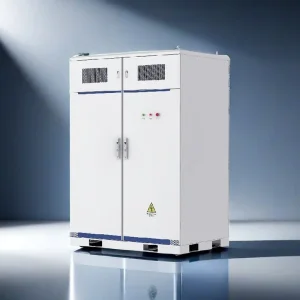
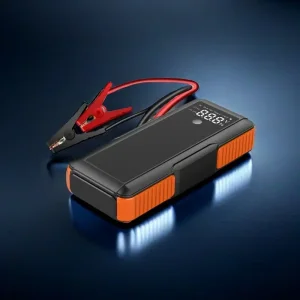
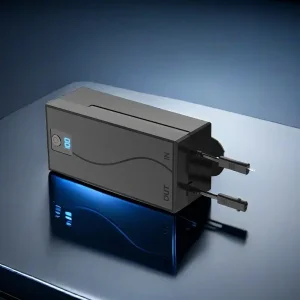
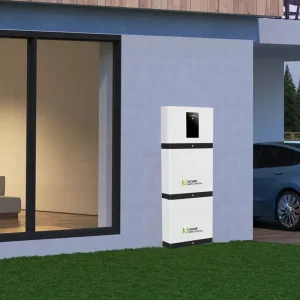
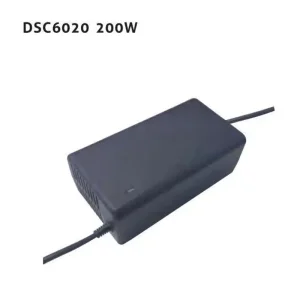
Explore our top-tier marine-ready charging equipment, heavy-duty smart starters, and comprehensive power storage modules certified for global distribution.

The global marine industry is undergoing a historic decarbonization transformation. Driven by strict International Maritime Organization (IMO) carbon reduction directives and local emission-free zone regulations, commercial fleets, aquaculture systems, and leisure vessels are moving swiftly towards electric propulsion and advanced hybrid systems. The foundation of this shift relies on safe, efficient, and robust charging infrastructures.
Modern marine vessels utilize complex, multi-battery bank networks. These configurations are designed to power both heavy hybrid-electric drivetrains and critical auxiliary systems, including onboard navigation, refrigeration, communications, and safety circuits. A high-efficiency marine battery charger acts as the core of this system, optimizing energy flow, maintaining battery chemistry integrity, and protecting expensive marine battery assets from premature degradation caused by the ocean's harsh electrical and environmental challenges.

An engineering breakdown of modern high-frequency marine power chargers, highlighting conversion efficiency, multi-chemistry profiles, and interface controls.
Our marine battery chargers utilize LLC resonant conversion topologies integrated with Active Power Factor Correction (APFC > 0.99). This reduces electromagnetic interference (EMI) and guarantees energy conversion efficiencies up to 94%, significantly lowering heat generation inside sealed enclosures.
Designed with adaptive charging curves, our systems support Lead-Acid, AGM, Gel, and high-performance Lithium Iron Phosphate (LiFePO4) chemistries. Microprocessors monitor parameters to apply precise 3-stage or 4-stage charge algorithms, preventing overcharging and thermal runaway.
Seamless communication via CAN bus and NMEA 2000 protocols allows the charger to interface directly with the ship's Glass Bridge displays, Battery Management Systems (BMS), and centralized telemetry systems, enabling remote performance monitoring and diagnosis.
How marine distributors and OEM boatbuilders streamline engineering requests, mitigate supply-chain risks, and accelerate product rollouts.
For B2B marine procurement managers, sourcing reliable electrical systems involves navigating challenging supply constraints. Shipbuilders and commercial fleet fleet operators need partners capable of handling complex engineering requirements, such as custom input voltages (110V/230V auto-sensing, 3-phase 400V shore power systems) and distinct physical dimensions to fit compact vessel bulkheads.
As an OEM/ODM manufacturing facility, we address these challenges through modular engineering. Our scalable platforms allow quick adjustments to charging output limits, connectors, and mounting styles without requiring long, expensive redesign cycles. We maintain a reliable supply chain of automotive-grade components, ensuring consistent manufacturing lead times even during global trade fluctuations.
Key Strategic Procurement Advantages:
Under Grace Developers Co., Limited, we deliver state-of-the-art power conversion and green energy storage solutions to global industrial markets.

We operate with honesty, transparency, and high integrity in all our customer and supplier partnerships.

We push the boundaries of renewable energy technology to deliver efficient, future-proof power systems.

We strive for excellence in everything we do, from advanced product development to client support.

We believe mutual growth and robust teamwork are key to building lasting global business partnerships.
Engineered to withstand the harshest maritime conditions while meeting strict global electrical safety certifications.
Sealed aluminum enclosures prevent damage from water spray, salt fog, and fine dust. Internal circuitry undergoes a double-sided conformal coating process to resist corrosion in high-humidity marine environments.
Maritime hulls subject onboard systems to continuous vibration. Our structural layouts comply with MIL-STD-810G vibration standards, featuring robust PCB standoffs, secure internal cabling, and potted inductor cores.
Our manufacturing and testing designs meet key safety protocols, including UL1236 marine guidelines, CE (LVD/EMC), FCC Class B, and RoHS environmental rules, streamlining custom vessel clearance.
Common engineering and procurement questions answered by our power electronic design team.
Yes. Our multi-bank marine chargers feature independent isolated outputs. This allows you to charge different battery types (such as an AGM engine starter and a LiFePO4 auxiliary bank) with specific charging curves and voltages, preventing cross-interference.
Battery charging chemistry is highly temperature-dependent. Our chargers use external temperature sensors to monitor the battery bank directly, adjusting output voltages in real time to prevent thermal runaway in hot climates and ensure complete charging in cold conditions.
Galvanic corrosion can quickly damage boat hulls. Our marine power chargers feature galvanic isolation of over 2000V between the input AC line, the internal power stage, and the DC output terminals. This breaks galvanic paths and protects metal parts from electric corrosion.
Yes. Designed with wide input voltage ranges (typically 85V-265V AC, 45Hz-65Hz), our systems handle voltage fluctuations and frequency shifts common to marine generators and varying marina power grids.
We offer comprehensive ODM services, including customized charging algorithms, modified casing sizes, specific connectors, and custom CAN bus profiles (such as proprietary NMEA 2000 PGNs) to match your shipboard management systems.
Explore our full line of specialized power supplies, smart LED drivers, and versatile domestic power packs designed for modern vessels.
 ELITE POWER