Industrial-Grade Energy Systems Engineering and Infrastructure Components
The transition from legacy 3.5mm auxiliary jacks to USB Type-C connections represents a fundamental paradigm shift in consumer and industrial audio transport. For decades, audio delivery relied entirely on analog waveforms pushed over physical copper leads directly to passive transducers. Today, with smart devices prioritizing ultra-thin structural footprints, structural ingress protection (IP68 ratings), and massive battery arrays, the analog audio subsystem has been fully migrated to the digital domain.
By utilizing Type-C ports for digital-to-analog conversion, manufacturers bypass internal device DAC structures which are prone to electromagnetic interference (EMI) generated by surrounding high-frequency components such as cellular modems, Wi-Fi chips, and multi-core processors. Instead, modern audio design relies on active USB-C headphone adapters that house dedicated digital signal processing (DSP) units inside the connector housing itself. This allows for lossless signal transmission, deeper acoustic customization, and higher impedance driving capability outside the host chassis.
Information Gain Indicator: True high-fidelity audio requires understanding the difference between "Active" and "Passive" Type-C audio modes. Passive adapters rely on Audio Accessory Mode (analog signals routed directly over Type-C CC pins). Active adapters utilize internal DAC (Digital-to-Analog Converter) chipsets, offering universal compatibility across laptops, tablets, and smartphones.
Enables conversion rates of 24-bit/96kHz up to 32-bit/384kHz, delivering studio-grade audio output directly from digital streams.
Designed with Ultra-Low-Power LDO linear regulators to prevent heavy battery drain on mobile host devices.
Metal shell packaging with grounded inner shielding cans to neutralize surrounding wireless network interference.
Enterprise buyers, electronic accessory brands, and system integrators must prioritize rigorous laboratory measurements when selecting an ODM partner. Audio transmission is exceptionally sensitive to impedance fluctuations and thermal conditions. Below are the key engineering specifications that dictate performance differences between lower-grade adapters and certified high-fidelity equipment:
| Parameter Name | Consumer Standard | Industrial / Audiophile Spec | Testing Methodology |
|---|---|---|---|
| Total Harmonic Distortion + Noise (THD+N) | < 0.01% @ 1kHz | < 0.0003% @ 1kHz (32Ω load) | Measured via Audio Precision APx525 Analyzer |
| Signal-to-Noise Ratio (SNR) | > 95 dB | > 120 dB (A-Weighted) | Evaluated across 20Hz - 20kHz dynamic range |
| Output Load Impedance Matching | 16Ω - 32Ω | 16Ω - 600Ω (Smart Auto-detection) | Dynamic impedance sensing via integrated firmware |
| Crosstalk Isolation | -70 dB | < -100 dB | Stereo separation test at 10kΩ output load |
| Digital-to-Analog Decoding | 16-bit / 48kHz | 32-bit / 384kHz PCM, DSD64/128 | Native bitstream analysis via driver controller |
For enterprise purchasing departments sourcing Type-C adapters for call centers, high-noise industrial communication, aviation headsets, or consumer electronics brands, selecting the correct DAC controller IC (such as Realtek ALC5686, Conexant CX31993, or ESS Sabre series) is essential. Lower-end chips lack support for remote in-line microphone arrays and volume control protocols (UAC 2.0 standard), which can degrade hands-free communication quality.

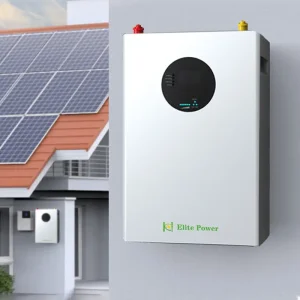
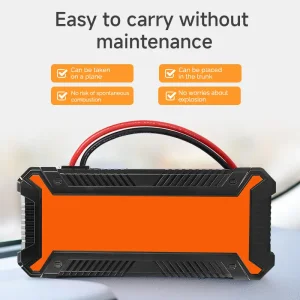
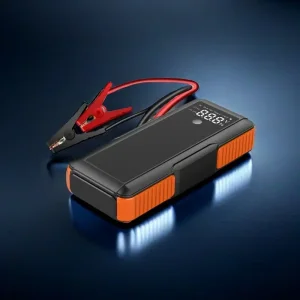
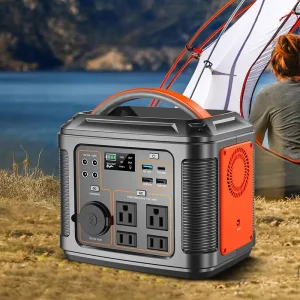
ELITE POWER is a subsidiary of GRACE DEVELOPERS CO., LIMITED. We have branches in Hong Kong, Shenzhen, and Dongguan, China. As a new energy production enterprise integrating scientific research, design, manufacturing, and sales, we focus on intelligent green new energy storage solutions. Our products include household energy storage systems, industrial and commercial energy storage cabinets, energy storage containers, super capacitor jump starters, portable power stations, truck lithium batteries, furniture batteries, and so on.
Leveraging our deep electronics design expertise, micro-circuit control structures, and power management technologies, we deliver highly integrated power and interface accessories. Our engineering proficiency in precision assembly, signal noise suppression, and power conversion enables us to design and manufacture ultra-reliable consumer electronics peripherals and active type-c headphone adapters that stand up to the most demanding commercial applications.
Certified Performance, Strategic Global Partnerships, and Ethical Business Values

We operate with honesty and transparency in all our business dealings.

We are committed to pushing the boundaries of renewable energy technology to create a greener future.

We strive for excellence in everything we do from product development to customer service.

We believe that teamwork and partnership are most important for partners.
Manufacturing high-fidelity audio adapters and complex electrical systems demands advanced clean-room operations and micro-soldering precision. Located within China's primary high-tech production hubs (Dongguan and Shenzhen), our facilities leverage automated Surface Mount Technology (SMT) lines to construct multi-layered PCBs containing complex DAC architectures. These production units are highly optimized to minimize parasitics and electrical noise.
Our Quality Assurance pipeline includes 100% automated electrical continuity testing, high-frequency signal analysis, and environmental simulation chambers (thermal shock, salt mist corrosion, and multi-axis bending tests exceeding 10,000 cycles). By employing automated optical inspection (AOI) systems alongside custom acoustic diagnostic software, we verify the DAC performance profile of each unit before packaging and shipment.
Our strategic presence in the Pearl River Delta guarantees immediate access to tier-one raw material suppliers, including high-purity copper casting foundries, certified high-flexibility TPE/Kevlar braided sheath manufacturers, and precision metal-stamping operators. This robust, integrated supply chain reduces lead times and insulates clients from global supply shocks, allowing us to maintain stable pricing and rapid production scalability.
The utility of USB-C audio engineering extends far beyond standard consumer electronics. Active Type-C adapters and conversion modules are critical in several industrial fields:
Technical and Logistical Insights for Commercial Buyers
High-Efficiency Industrial Charging and Power Management Solutions
 ELITE POWER