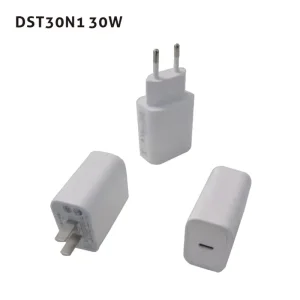
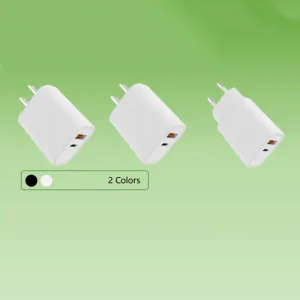
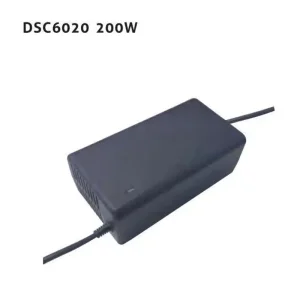
High-Quality Laptop Charger Type C Factory & Factories

Next-Generation GaN OEM/ODM Charging Solutions & Intelligent Renewable Systems for Global Enterprises

Global Laptop Charger Type C Manufacturing Landscapes

An industry-leading deep dive into B2B procurement strategies, GaN semiconductor evolution, and global compliance regulations governing laptop charging architectures.

The electronics and renewable infrastructure market is undergoing a seismic shift. As international legislative frameworks mandate standard universal interfaces to curb electronic waste, the USB Type-C Power Delivery (PD) standard has asserted itself as the unquestioned system architecture. Laptop chargers, once characterized by fragmented, proprietary barrel connectors, are now standardized under PD 3.0 and PD 3.1 Extended Power Range (EPR) architectures. This standardization enables scaling from basic 45W mobile devices up to demanding 240W gaming and mobile workstation rigs.
For enterprise procurement, selecting the right laptop charger factory is no longer a matter of comparing unit costs. Global buyers must assess a factory's engineering design capabilities, component selection criteria, manufacturing QA/QC systems, and international compliance pathways. To make informed purchasing decisions, buyers must balance the integration of advanced materials, such as Gallium Nitride (GaN) microchips, with strict thermal designs and safety configurations.

1. The Gallium Nitride (GaN) Advantage

GaN semiconductors replace traditional silicon, increasing switching speeds, boosting power density, and reducing physical unit sizes by up to 50% without thermal overload.

2. Dynamic Power Management

Intelligent power negotiation (PPS) ensures that multi-port laptop chargers dynamically allocate precise wattages, protecting delicate device batteries while maximizing charging speeds.

3. Comprehensive Certification

Top factories guarantee full international compliance, ensuring products carry UL, CE, FCC, RoHS, and CB certifications, allowing seamless market distribution.

Silicon vs. GaN Semiconductor Core Metrics

A detailed technical comparison explaining the efficiency metrics and thermal management properties that define modern laptop charger factories.

Performance Metric Legacy Silicon Chargers First-Generation GaN Advanced GaN III / GaN Fast Pro
Power Conversion Efficiency 85% - 88% 90% - 92% 94% - 96.5%
Switching Frequency 50 kHz - 100 kHz 200 kHz - 300 kHz 500 kHz - 1 MHz+
Thermal Dissipation Rate Moderate (Requires massive heatsinks) High (Reduced volume heatsinks) Ultra-High (Automated power-down & premium gel coating)
Volume-to-Power Ratio Low (Large form factor, heavy footprint) Good (approx. 30% smaller than legacy) Exceptional (Up to 55% space savings, ultra-slim designs)
Transient Load Response Standard Accelerated Real-Time Auto-Negotiation (0.01s latency)

Advanced Thermal Interface Material (TIM) Technology

In laptop charger manufacturing, keeping temperatures down is a critical challenge. Modern factories solve this by using high-density silicon potting compounds and graphite thermal sheets. These materials pull heat away from active components and spread it evenly across the charger’s outer shell, preventing hot spots. Additionally, smart thermal management systems will automatically throttle power output if internal temperatures rise above 85°C. This protection layer prevents components from burning out and extends the lifespan of the charger.
ELITE Experience Manufacturing Facility
ELITE
Experience

About Our Company

ELITE POWER is a proud subsidiary of GRACE DEVELOPERS CO., LIMITED. With key regional branches established in Hong Kong, Shenzhen, and Dongguan, China, we operate at the heart of the global electronics supply chain. As an integrated, new energy enterprise, we blend scientific research, industrial design, custom manufacturing, and international sales.
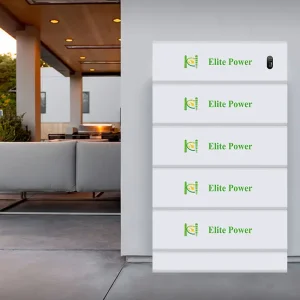
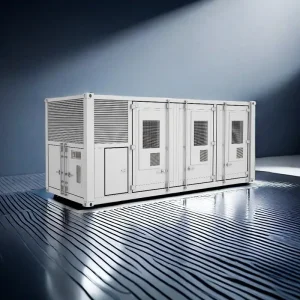
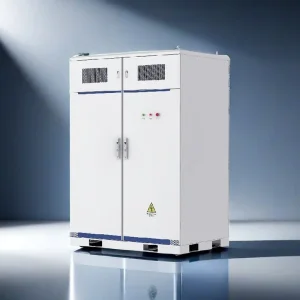
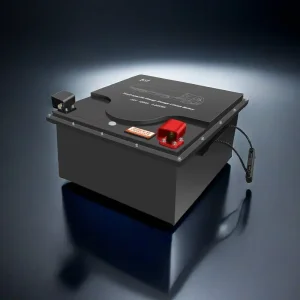
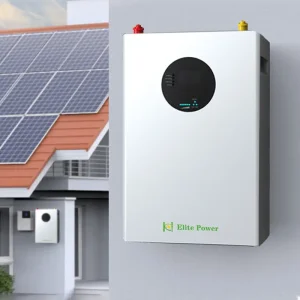
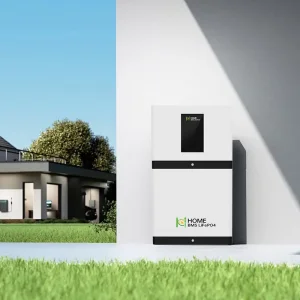
We focus on intelligent, green, new energy storage solutions and power management hardware. Our extensive product portfolio includes household energy storage systems, industrial and commercial energy storage cabinets, containerized energy storage systems, supercapacitor jump starters, lightweight portable power stations, heavy-duty truck lithium batteries, and power delivery (PD) wall chargers.
ISO
9001:2015 & 14001:2015
2022
US Strategic Alliance
100%
Fully Tested Quality Assurance

Why Choose Elite Power?

Our dedication to environmental responsibility, strict manufacturing standards, and strategic global alliances ensures high-quality product delivery.

We have obtained ISO:9001:2015 and ISO14001:2015 quality management system and environmental management system certifications. In 2022, we signed a strategic cooperation agreement with key USA partners to comprehensively develop the optical storage and charging system market in the US. This partnership focuses on supplying home energy storage, industrial energy solutions, heavy truck parking batteries, and emergency activation systems.

Our Team's Core Values

Faith Value Icon

FAITH

We operate with honesty and transparency in all our business dealings.

Innovation Value Icon

INNOVATION

We are committed to pushing the boundaries of renewable energy technology to create a greener future.

Effort Value Icon

EFFORT

We strive for everything we do from product development to customer service.

Win-Win Value Icon

Win-Win

We believe that teamwork and partnership are most important for partners.

B2B Manufacturing Controls & Localized Compliance

How our factories control failure rates and ensure global compliance across European, North American, and Asian markets.

A major risk in mass-producing consumer electronics, particularly high-power Type-C chargers, is the component failure rate. ELITE POWER mitigates this risk by enforcing a multi-stage Quality Assurance (QA) workflow directly on our assembly lines in Shenzhen and Dongguan:

1. Incoming Component Inspection (IQC)

We test all incoming capacitors, GaN controller chips, and PCB baseboards against tolerance profiles using computerized parameter analyzers before assembly begins.

2. Automated Optical Inspection (AOI)

Post-SMT reflow soldering, AOI scanners examine every solder joint for micro-fractures, voids, or misalignments, reducing human error rates to zero.

3. 100% Load Burn-in Testing

Every finished charger undergoes a full-load burn-in test inside specialized thermal chambers for 4 hours to catch any early component failures before shipping.

4. Electromagnetic Compatibility

We run EMI testing on all adapter casings to guarantee compliance with FCC Class B and EN55032 standards, keeping line noise to a minimum.

Global Certification Matrix

Distributing electronics internationally requires complying with a complex web of certifications. ELITE POWER ensures that our OEM/ODM products are designed to meet standard compliance regulations from the ground up:
  • North America: UL 62368-1, FCC DoC, and Energy Star Level VI compliance.
  • European Union: CE (LVD & EMC Directives), RoHS, REACH, and Ecodesign requirements.
  • United Kingdom: UKCA mark certification for electronic appliances.
  • Japan & South Korea: PSE and KC certification marks for internal electrical safety standards.

Renewable Energy Synergy: The Next Decade

Connecting smart power adapters to larger energy grids, micro-storage networks, and portable power stations.

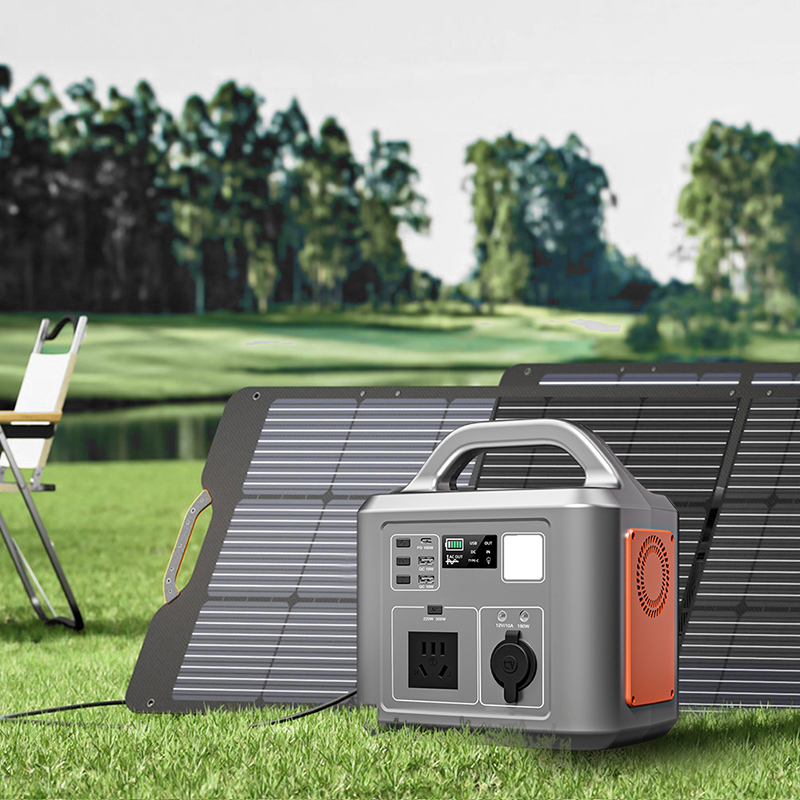
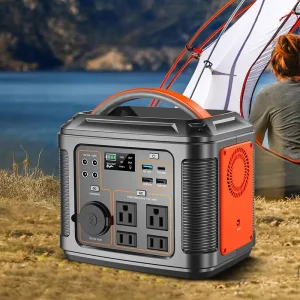
As part of our commitment to green energy, we look beyond the charger itself. Our strategic plans focus on linking consumer-end PD hardware directly with renewable energy systems. For instance, our portable solar energy storage solutions can connect with 100W/140W Type-C outputs, creating a closed-loop microgrid. This integration lets users capture, store, and distribute solar energy directly to their laptops, communication gear, and emergency devices.
By combining our experience in high-capacity energy storage containers (up to 2MWH) with smart consumer charging, we build highly integrated systems. Whether it is industrial storage, stackable household batteries, or Type-C fast-chargers, every product is engineered to maximize conversion efficiency and minimize heat loss.

B2B Procurement & Sourcing FAQ

Frequently asked questions concerning factory lead times, engineering tooling, dynamic power profiles, and minimum order requirements.

1. What is the standard MOQ for OEM/ODM laptop charger orders?

For customized OEM/ODM housing designs, branded packaging, or specific localized AC plug configurations, the standard minimum order quantity (MOQ) is generally 1,000 units. For off-the-shelf standard designs, we can support smaller trial runs of 500 units to help partners validate their local markets.

2. How does the factory handle safety features to prevent battery damage?

Our chargers feature built-in smart controller chips that support the PPS (Programmable Power Supply) protocol. These chips communicate with connected laptops to adjust voltage and current dynamically in real-time. Additionally, they include hardware-level protection against over-voltage (OVP), over-current (OCP), over-temperature (OTP), and short-circuits (SCP).

3. Can you customize the wall pins and packaging for EU, US, UK, and AU regions?

Yes. We supply interchangeable wall plug heads and regional pin configurations (US, EU, UK, AU, CN, KR, JP). We also offer custom packaging design, graphic layout alignment, and user manual translations to ensure your products are retail-ready.

4. What testing protocols are used on high-wattage (100W+) GaN chargers?

High-wattage products undergo strict testing: initial component checking (IQC), automated optical inspection (AOI) after soldering, functional calibration, and a 100% full-load burn-in test at 40°C ambient temperature. We also perform regular drop tests, salt spray tests on metal parts, and EMI scanning to guarantee long-term reliability.

5. What is the typical lead time for a production batch?

For standard designs with custom branding, our typical lead time is 25 to 30 days after proof approval. For completely new ODM projects requiring new enclosure tooling, the timeline ranges from 60 to 75 days, which includes prototype testing, verification cycles, and safety certification approvals.

6. How does your strategic USA partnership benefit global clients?

Our 2022 strategic cooperation agreement with US partners has helped us refine our optical storage and charging systems to meet strict Western energy standards. This allows us to share research insights and supply chain benefits across all our product lines, including laptop chargers, energy storage, and industrial equipment.