High-Quality Smart Home Energy Storage Manufacturer & Factories

Innovative Battery Solutions & Global B2B Manufacturing Integration

ELITE POWER manufacturing process
ELITE POWER
GRACE DEVELOPERS CO., LIMITED Subsidiary

Pioneering Intelligent Green New Energy Solutions

ELITE POWER, a division of GRACE DEVELOPERS CO., LIMITED, operates key operations and R&D facilities across Hong Kong, Shenzhen, and Dongguan, China. Our organization represents a new paradigm in clean energy manufacturing, combining foundational scientific research with industrial-scale engineering, product layout customization, and global distribution.

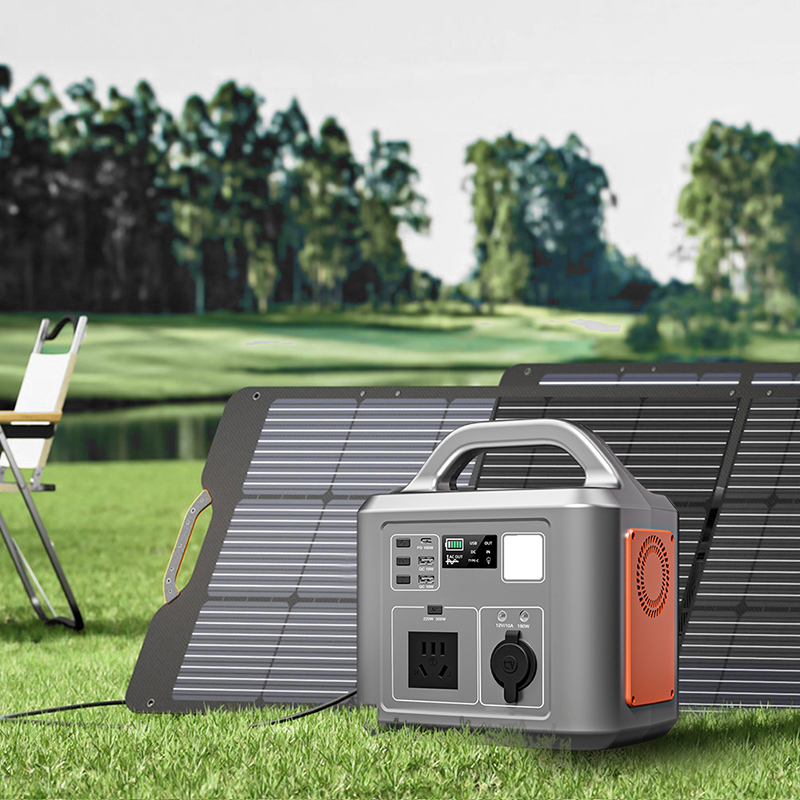
We develop comprehensive battery-driven hardware ecosystems. Our portfolio spans from utility-scale energy storage containers to modular, residential smart energy storage walls, customizable commercial energy storage systems (CESS), micro-power solutions for smart homes, specialized truck start-up batteries, and smart home furniture batteries. By utilizing high-safety chemistry profiles (LiFePO4) and intelligent Battery Management Systems (BMS), we ensure robust grid resilience and localized compliance for international projects.

Our manufacturing output is governed by rigorous global guidelines. With strategic alliances across North America, Europe, and key APAC markets, we provide turnkey OEM and ODM services that meet strict performance standards for industrial power infrastructure.

ISO 9001
Quality Management Certified
ISO 14001
Environmental Systems Assured
Tier 1 LFP
Premium Lithium Cell Chemistry
USA JV
Strategic Partners in North America

Why Enterprise Buyers Choose ELITE POWER

Our operational framework is built on trust, technological capability, and mutual growth

FAITH
FAITH
We operate with honesty and transparency in all our business dealings.
INNOVATION
INNOVATION
We are committed to pushing the boundaries of renewable energy technology to create a greener future.
EFFORT
EFFORT
We strive for everything we do from product development to customer service.
Win-Win
Win-Win
We believe that teamwork and partnership are most important for partners.

Smart Home Energy Storage: Evolution & Structural Trends

The residential energy storage sector has transitioned from a niche backup resource into a vital component of the modern smart home. This evolution is driven by several key factors: global grid instability, rising electricity rates, and policy changes like the Net Energy Metering (NEM 3.0) framework, which reduce compensation for feeding excess solar energy back to the grid. In response, modern smart homes are shifting toward self-consumption architectures, positioning Battery Energy Storage Systems (BESS) as the primary hub for home power distribution.

Technologically, the industry is standardizing around Lithium Iron Phosphate (LiFePO4) chemistry due to its thermal stability, low toxicity, and cycle lifetimes exceeding 6,000 charges at high depth-of-discharge (DoD). Modern systems are moving away from monolithic high-voltage packs toward modular, stackable designs. These configurations allow installers to scale capacity dynamically from 5kWh to over 20kWh, adapting to varying household loads. Additionally, the integration of hybrid inverters simplifies installations by unifying solar conversion and battery management into a single system, reducing energy conversion losses and installation complexity.

Furthermore, home energy storage systems are moving beyond simple backup power. With APIs for Virtual Power Plants (VPPs) and local energy markets, residential batteries can aggregate capacity to support municipal grids. This allows homeowners to discharge power during peak demand periods for financial return. This integration transforms home energy storage from a defensive infrastructure asset into an active asset class, accelerating ROI for buyers worldwide.

Global B2B Procurement Demands & Supply Chain Integration

Managing procurement in the energy storage industry requires balancing performance specifications, cost constraints, and regulatory hurdles. B2B buyers—including EPC contractors, wholesale distributors, and system integrators—look for key metrics when selecting manufacturing partners:

  • Quality Control Protocols: Verification of cell-level performance through strict testing protocols (e.g., cell sorting, aging cycles, and high-temperature capacity testing) to prevent thermal runaway.
  • Comprehensive Certifications: Compliance with international regulations, including UL 1973, UL 9540, CE (EN 62619), and UN38.3, is critical for smooth customs clearance and grid interconnection.
  • Customization Capabilities (OEM/ODM): Adapting battery voltage, form factors, communication protocols (CAN, RS485, Wi-Fi), and firmware controls to match local market requirements.
  • Supply Chain Transparency: Traceability of raw materials, especially lithium and cobalt, alongside reliable lead times to match project construction schedules.

ELITE POWER addresses these requirements through our engineering offices and factories in HK, Shenzhen, and Dongguan. We maintain strict manufacturing standards, certified by ISO 9001 and ISO 14001, to ensure every shipped batch meets strict global performance baselines.

Macro-Level Solutions: Bridging Residential and Utility Storage

Modern grid operators face challenges with power generation variability. Addressing this mismatch between energy generation and consumer demand requires a tiered storage strategy that links residential systems with large-scale industrial assets.

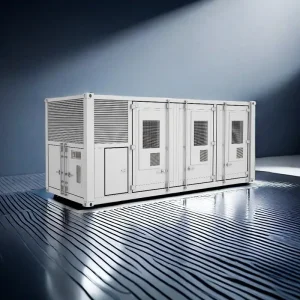
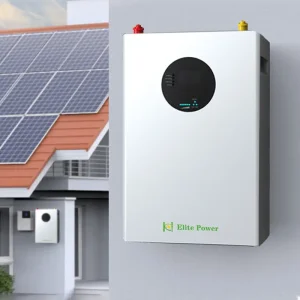
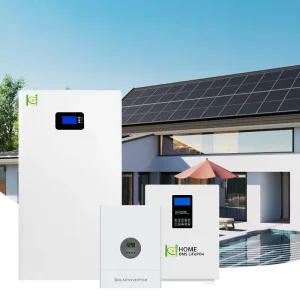
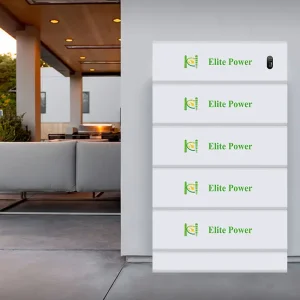
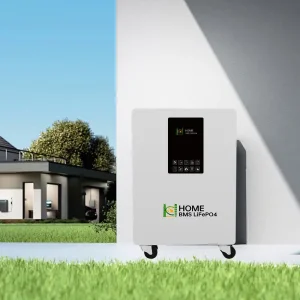
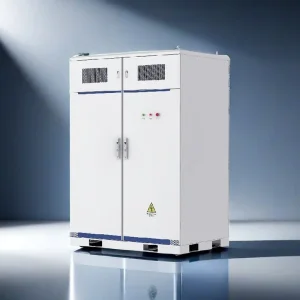
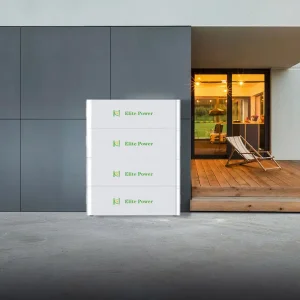
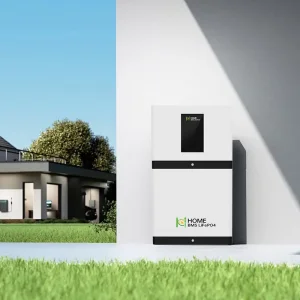
For residential settings, stackable (such as our 20.48kWh and 19.2kWh configurations) and wall-mounted (10.24kWh) designs provide reliable local power reserve, reducing strain on distribution transformers. For Commercial and Industrial (C&I) installations, higher thermal loads require dedicated structures. Our OEM Commercial Energy Storage Cabinets (215kWh) and 1MWH-2MWH utility-scale containers use active liquid cooling, intelligent fire suppression systems, and double-insulated electrical containment to safely handle heavy loads. By deploying residential and commercial systems together, project developers can build virtual microgrids that optimize local distribution and secure municipal power reserves.

Technology Roadmap: Future-Proofing Battery Architectures

Our technology roadmap focuses on three main engineering areas: cell chemistry development, cloud-connected management systems, and smart grid integration.

  • Lithium-Cell Upgrades & Chemistry Research: While LiFePO4 remains the industry standard, we are exploring high-density manganese-doped LFP (LMFP) cells to improve low-temperature performance and energy density. In addition, we are conducting preliminary R&D into Sodium-ion (Na-ion) chemistries for lower-cost stationary applications.
  • Smart BMS and EMS Technologies: Our next-generation Battery Management Systems use machine-learning algorithms to estimate State of Health (SoH) and State of Charge (SoC). These systems monitor internal cell resistance and surface temperatures to predict potential cell faults before they occur.
  • Virtual Power Plant (VPP) Integration: We are integrating standard communication APIs into our residential systems, allowing our batteries to connect securely with utility-led virtual power plant platforms.

Compliance, Safety Standards, and Global Distribution

Exporting and installing lithium batteries worldwide requires navigating complex safety regulations. ELITE POWER ensures compliance with international standards to streamline importing and commissioning:

North American Regulations: Our systems are designed to meet UL 1973 (for stationary battery packs) and UL 9540 (for complete energy storage systems), in line with local NFPA 855 fire protection requirements. European Standards: Our products comply with CE directives, including EN 62619, which defines testing parameters for safety under misuse conditions. Logistics & Transport: All batteries undergo UN38.3 testing, certifying their structural integrity during land, air, and ocean transit.

Technical FAQ & Procurement Guide

Answers to key questions from B2B buyers, engineers, and distributors

1. What cell chemistry is used in ELITE POWER's smart home energy storage systems?
Our systems utilize Lithium Iron Phosphate (LiFePO4) chemistry. LiFePO4 offers superior safety, thermal runaway resistance, and long life cycles (exceeding 6000 cycles at 80% Depth of Discharge) compared to cobalt-based lithium chemistries.
2. How do your stackable home energy storage systems scale capacity?
Our stackable systems (such as the EU 20.48kWh and US 19.2kWh configurations) feature modular blind-mate plugs. This allows installers to stack modular units on top of one another without external wiring, automatically connecting them to the master BMS module.
3. Are ELITE POWER battery storage systems compatible with third-party solar inverters?
Yes, our integrated BMS supports communication protocols (including CAN and RS485) compatible with major inverter brands such as SMA, Growatt, GoodWe, Victron, and Deye, ensuring smooth integration.
4. What customized OEM/ODM services do you provide for large-scale procurement?
We provide full OEM/ODM services, including sheet-metal chassis design, custom branding, BMS tuning, communication protocol integration, and specialized voltage configurations (e.g., 48V, 51.2V, or high-voltage arrays).
5. What thermal management systems are used in the 215kWh C&I cabinets and 1MWH-2MWH containers?
Our commercial cabinets and containers feature active liquid cooling or industrial HVAC systems. These systems maintain cell temperatures within the optimal 20°C to 30°C window to prevent localized degradation and extend system lifespan.
6. What certifications does your manufacturing facility hold?
Our manufacturing operations are certified under ISO 9001:2015 for quality management and ISO 14001:2015 for environmental management. Individual products hold CE, UL, UN38.3, and IEC certifications.
7. How does the supercapacitor jump starter operate compared to traditional lithium starters?
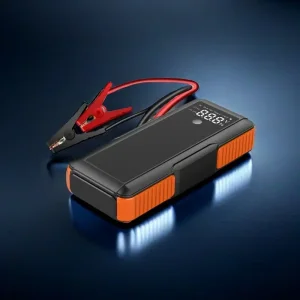
Our 12V 500F Supercapacitor Jump Starter charges rapidly from residual battery voltage. Because it stores energy electrostatically rather than chemically, it is safer to store, performs reliably in extreme cold (-40°C to +65°C), and offers a long cycle life.
8. What specialized options are available for indoor furniture battery systems?
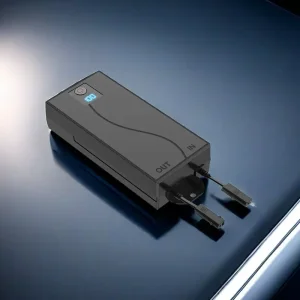
We manufacture low-profile 2500mAh and 5000mAh battery packs designed for integration into smart furniture, motorized recliners, and home accessories, providing reliable local power without visible cabling.
9. What are your lead times and shipping support for international orders?
Standard OEM production takes 4 to 6 weeks depending on customization. We offer FOB, CIF, and DDP shipping through logistics partners certified in handling Class 9 hazardous materials (UN3480).
10. Do you provide localized technical support and warranties?
Yes, our strategic partnerships (including our US joint venture) allow us to offer regional technical support, troubleshooting, and warranty management. Residential and commercial units are backed by standard 5-to-10-year warranties.