Explore our industrial-grade, certified solar storage components, custom battery systems, and power conversion configurations engineered for high-availability deployments.
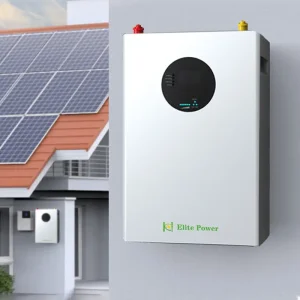
Ultra-slim wall-mountable LiFePO4 residential system designed with highly integrated smart BMS protocol interfaces for standard hybrid inverters.
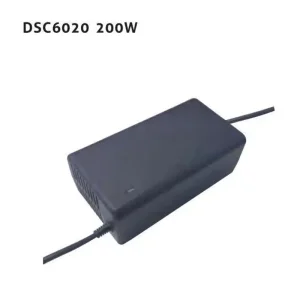
High-frequency active PFC power conversion technology delivering stable, ripple-free current profiles for specialized industrial battery charging.
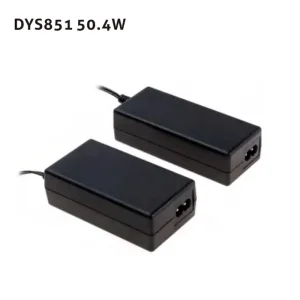
IEC60601-1 2xMOPP compliant power solutions engineered with robust galvanic isolation protection and electromagnetic shielding limits.
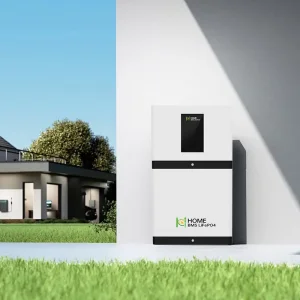
Compact modular energy storage integration. Built-in hybrid inverter, pre-programmed battery cabinet, plug-and-play installation structure.
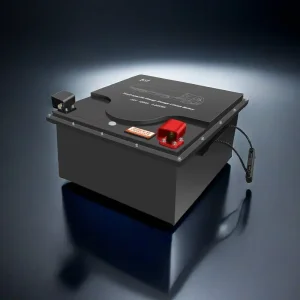
Heavy-duty, high-vibration resistant LiFePO4 cells configured specifically for APU replacement and stop-start auxiliary cabin power optimizations.
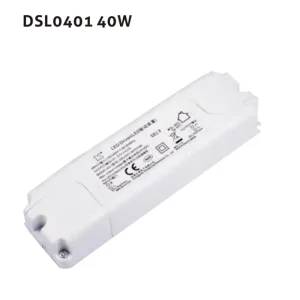
High-efficiency constant current power regulation, tailored for integration with photovoltaic-driven smart streetlights and LED matrices.
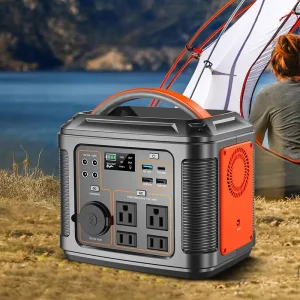
Lightweight pure sine wave off-grid station with advanced thermal management, smart LCD telemetry, and multi-protocol DC output arrays.
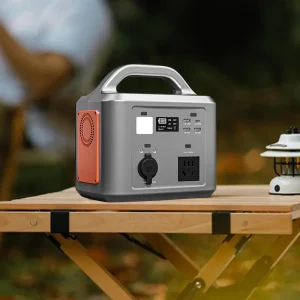
Dual bi-directional charging capability with integrated MPPT inputs for optimized solar yield during emergency backup operation.
Strategic Insights on Battery Energy Storage Systems (BESS) and Hybrid Microgrid Scaling
The global transition to decentralized clean energy grids is accelerating the deployment of Utility and Commercial & Industrial (C&I) battery energy storage systems (BESS). Driven by grid congestion, capacity constraints, volatile spot-market pricing, and corporate sustainability mandates, solar storage systems are no longer passive backups; they have transitioned to become the active foundation of enterprise energy management. BESS operators are migrating from simple peak-shaving mechanics to complex multi-revenue structures—including frequency containment reserves (FCR), dynamic containment, capacity market arbitrage, and automated demand response participation.
Under the lens of strict technical compliance (such as UL9540A for thermal runaway mitigation, UL1973 for battery packing safety, and IEC62619 for industrial applications), engineering teams must optimize system architectures. Levelized Cost of Storage (LCOS) has emerged as the defining metric for asset managers, heavily influenced by round-trip efficiency (RTE), calendar aging degradation curves, and advanced thermal management architectures (liquid cooling vs. forced-air cooling). In key economic regions like Europe and North America, regulatory programs such as the US IRA (Inflation Reduction Act) and European Net-Zero Industry Act have driven massive investments in local sourcing, making the role of qualified ODM and OEM manufacturing hubs critical to avoiding cross-border trade friction and localized grid compliance failures.
Analyzing Lifecycle Degradation, Active Balancing BMS, and Next-Gen Energy Storage Protocols
Modern commercial energy storage system deployment requires deep understanding of raw cell chemistry and power electronics integration. Currently, Lithium Iron Phosphate (LiFePO4) remains the dominant technology profile due to its inherent thermal stability, low toxicity index, and long cycle-life parameters (>6000 cycles at 80% Depth of Discharge). However, next-generation architectures are incorporating Hybrid Solid-State cells and Supercapacitor modules to bypass the current limitations of chemical kinetics under high C-rate demands.
Active cell balancing technologies operated through programmable Battery Management Systems (BMS) are vital to preventing premature array degradation. Passive balancing systems burn off excess cell voltage as heat, adding parasitic loads to the system. In contrast, dynamic active balancing redistributes the charge dynamically across the series-parallel matrix, minimizing spatial temperature variance down to <2°C within containerized systems. To support these topologies, ODM architectures use open telemetry protocols such as CANBus, Modbus TCP/IP, and DNP3, permitting seamless software handshake connections with mainstream inverters like SMA, Sungrow, Victron, and Solis.
| Metric / Parametric Feature | Residential LFP Stackable | C&I Cabinet BESS | Supercapacitor/APU System |
|---|---|---|---|
| Nominal Chemistry Array | LiFePO4 (LFP) Cells | LFP Prismatic 280Ah/314Ah | EDLC / Lithium-Carbon Hybrids |
| Operational Lifespan Range | 6,000 Cycles @ 0.5C / 80% DoD | 8,000 Cycles @ 1C / 90% DoD | >50,000 Duty Cycles |
| Thermal Safety Protocols | Passive Aerosol Fire Extinguishers | Liquid Chilled Plate + Novec 1230 | Robust Solid-Electrolyte Protection |
| Inverter Integration Type | Low/High Voltage DC Coupled | AC-Coupled Microgrid Bidirectional | Direct Heavy DC Auxiliary Coupling |
ELITE POWER - A Subsidiary of GRACE DEVELOPERS CO., LIMITED
ELITE POWER, a subsidiary of GRACE DEVELOPERS CO., LIMITED, operates branches in Hong Kong, Shenzhen, and Dongguan, China. Operating as a unified new energy production enterprise, we integrate scientific research, system engineering, industrial design, ISO-compliant manufacturing, and global logistics execution. Our focus is the engineering and deployment of intelligent green new energy storage solutions across diverse global industrial domains.
Our comprehensive production facility handles domestic and export requirements for household energy storage systems, containerized C&I energy storage cabinets, supercapacitor jump starters, heavy truck parking batteries, high-precision medical power supplies, and customized portable power hubs. With ISO:9001:2015 Quality Management and ISO14001:2015 Environmental Management system certifications, we assure supply chain safety, structural reliability, and process traceability from silicon to system.
We operate with complete honesty and operational transparency in all commercial, legal, and engineering dealings, ensuring long-term project protection for our global asset-development partners.
Committed to pushing engineering limits in smart power electronics, thermodynamic balancing, and AI-enabled software dispatch integrations to lower microgrid LCOS.
We strive for technological perfection in everything we execute, spanning physical PCB assembly, multi-layered cell testings, environmental stress testing, and proactive field support.
We firmly believe that mutual long-term success is the sole metric for partnership, supporting OEM clients with margin protection and open software customization.
Tailoring Storage Technologies to Dynamic Regional Regulations and Extreme Operational Profiles
Recognizing the distinct operational structures across target markets, ELITE POWER signed strategic cooperation agreements with major USA partners in 2022 to co-develop the North American solar-storage-charging microgrid ecosystem. This strategic initiative integrates multi-port DC fast-charging terminals with containerized battery storage configurations to bypass utility demand charge structures. Crucially, this partnership targets fleet electrification logistics, heavy truck parking batteries, and vehicle auxiliary power units (APU), providing emergency engine activation, anti-idling power, and localized grid stabilization in line with US Federal Transit Administration requirements and NEVI standards.
In highly regulated markets like Europe, where residential solar self-consumption is prioritized over net metering, our high-voltage modular stackable arrays optimize energy self-sufficiency rates. By pairing intelligent cloud monitoring with localized edge controllers, European property managers can execute dynamic energy arbitrage. In developing regions, our micro-grid containerized storage platforms provide off-grid power to agricultural and manufacturing zones, replacing volatile diesel generation, mitigating fuel price volatility, and stabilizing voltage fluctuations.
Direct Solutions to Engineering, Compliance, and Procurement Queries from Solar Energy EPCs & Developers
Liquid-cooled designs reduce Levelized Cost of Storage (LCOS) by approximately 15% to 22% over a 10-year operating life. Liquid cooling arrays maintain cell temperatures between 25°C to 28°C with spatial variance below 2°C, which prevents localized cell degradation, limits hot spots, and extends the overall usable cycle count by up to 2,000 cycles compared to traditional fan-based cooling.
Our residential energy storage cabinets incorporate localized fire-suppression cartridges containing chemical aerosols. The high-performance casing features physical air gaps and non-flammable insulation barriers between individual cell pouches. If a localized cell failure occurs, the containment boundary blocks thermal transfer, preventing cell-to-cell cascading runaway.
Yes. The master BMS board features field-programmable, opto-isolated interfaces. The system can toggle communication modes (e.g., Modbus RTU, Modbus TCP, CANBus) to communicate directly with major inverter models, enabling monitoring of State of Charge (SoC), State of Health (SoH), temperature, and individual cell voltage.
Truck parking batteries must operate in high-vibration and extreme temperature environments. They feature cast-aluminum cell retention frames to meet SAE J2380 standards, structural foam encapsulation to absorb mechanical shocks, and low-temperature LFP chemistry designed to safely receive charge down to -20°C via localized thermal pads.
Supercapacitors operate using electrostatic double-layer capacitance (EDLC), which physically stores charges instead of relying on chemical reactions. They perform in temperatures ranging from -40°C to +65°C and charge in under 2 minutes. They support deep discharges without causing membrane degradation, outlasting standard lithium starter batteries.
Explore our external power supplies, modular high-voltage home battery configurations, USB charging hubs, and supercapacitor engines engineered for high-availability systems.
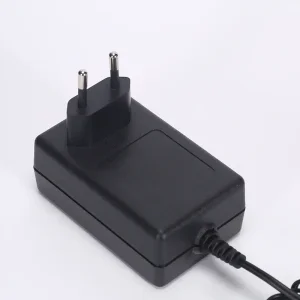
Wall-mount power supplies with universal inputs, meeting Energy Star Level VI efficiency, overvoltage protection, and short-circuit recovery.
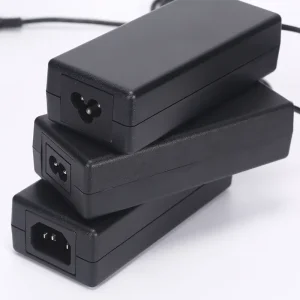
Compact desktop power supplies featuring high thermal efficiency, low standby losses, and certifications for global market entry.
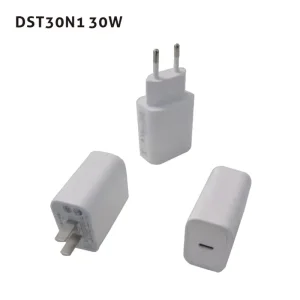
Gallium Nitride (GaN) high-speed chargers with USB-PD 3.0 protocol matching, offering power density with minimum thermal footprints.
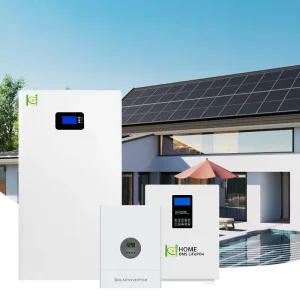
High-voltage battery stacks featuring scalable design configurations, simple clip-on connectors, and comprehensive smart monitoring diagnostics.
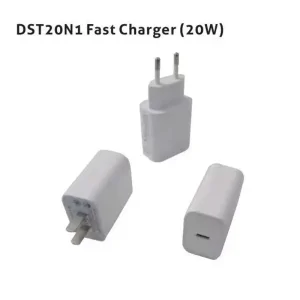
Cost-efficient USB power supplies designed for consumer electronics, auxiliary instrumentation, and general industrial interfaces.
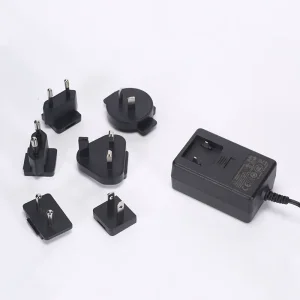
Universal AC travel adapters featuring multi-pin locking slides, matching global electrical regulatory compliance profiles.
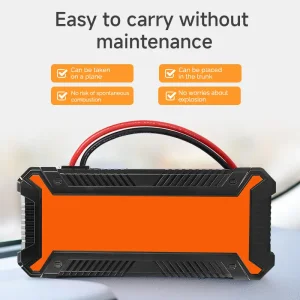
High-discharge supercapacitor pack engineered to start commercial vehicle engines instantly in extreme temperatures.
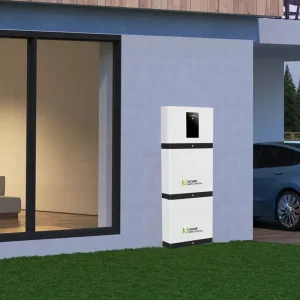
Dual cabinet 10kWh energy station designed to integrate with micro-generation assets, offering complete emergency load support.
 ELITE POWER