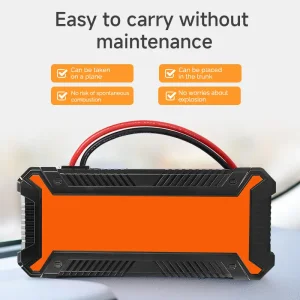
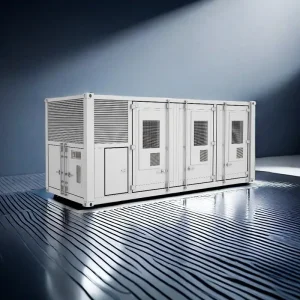
Direct factory pricing and OEM customization for emergency jump starters and premium wall power adapters tailored for German infrastructure.
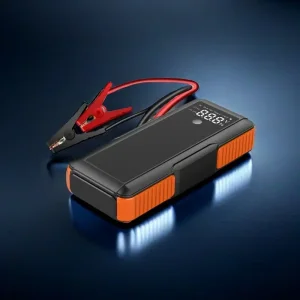
As the European Union moves aggressively toward net-zero emissions, transit hubs and automotive logistics networks within metropolitan areas like Berlin-Brandenburg require starting systems that operate cleanly, reliably, and independently of traditional battery chemistry limits. Typical electrochemical batteries rely on faradaic reactions, which slow down exponentially at sub-zero temperatures. In contrast, Electric Double-Layer Capacitors (EDLCs), commonly known as supercapacitors, store energy electrostatically.
From a physical standpoint, the capacitance $C$ of a supercapacitor is determined by the equation $C = \epsilon \frac{A}{d}$, where $\epsilon$ is the dielectric constant of the medium, $A$ is the high surface area of the activated carbon or graphene sheets, and $d$ is the distance across the double-layer. The extremely small thickness of the double-layer (in nanometers) and the massive active surface area ($1000 - 2000 \text{ m}^2/\text{g}$) yield huge capacitance ratings, such as our industry-grade 500F 12V supercapacitor jump starters.
Berlin is rapidly developing into the epicentre of European clean mobility. The state’s industrial landscape, powered by research parks in Adlershof and manufacturing facilities in Spandau and Tempelhof-Schöneberg, demands cutting-edge power solutions. Furthermore, the presence of major logistics corridors, municipal sanitation fleets (BSR), and public transport operators (BVG) translates into thousands of heavy-duty vehicles that cannot afford cold-weather operational downtime during German winters.
Historically, fleet operators relied on traditional lead-acid booster packs. However, heavy vehicle starting failures at temperatures below freezing point cost millions of Euros annually due to labor loss, delayed deliveries, and constant battery replacement cycles. By integrating ELITE POWER’s supercapacitor jump starters, fleet operators throughout Berlin can discharge massive electrical currents (up to 1,000 cold cranking amps) instantly, initiating diesel and petrol engines without chemical lag.
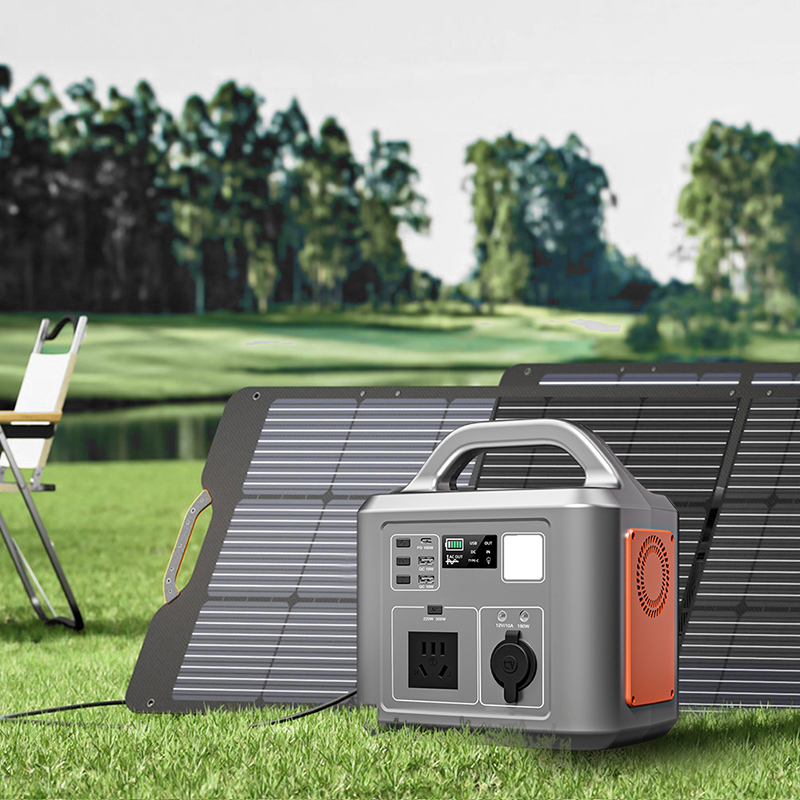
To help procurement managers in Berlin make informed structural decisions, this technical breakdown compares Supercapacitors with Lithium-Ion and Lead-Acid battery technologies:
| Technical Parameter | Supercapacitor (EDLC) Jump Starter | Lithium-Ion Booster Packs | Lead-Acid Booster Packs | |
|---|---|---|---|---|
| Operating Temperature Range | -40°C to +65°C | -10°C to +45°C (Degrades rapidly in cold) | -15°C to +40°C (Reduced capacity) | |
| Recharge Cycles | Over 500,000 cycles | ~1,000 cycles | ~400 cycles | |
| Charging Duration | 30 seconds to 2 minutes | 1.5 to 4 hours | 6 to 12 hours | |
| Risk of Thermal Runaway | Non-existent (No volatile chemical elements) | Moderate to High (Requires complex BMS) | Low (Corrosive acid hazard) | |
| Self-Discharge Rate | High (Designed for immediate energy capture/dump) | Low (Holds charge for months) | Moderate |
ELITE POWER, operating as a crucial subsidiary of GRACE DEVELOPERS CO., LIMITED, maintains advanced manufacturing clusters in Shenzhen and Dongguan, China, while executing technical coordination via our Hong Kong administration. By executing direct quality oversight under ISO:9001:2015 and ISO14001:2015 management frameworks, we export energy products that satisfy the strict technical directives of Germany's VDE Association and general CE/RoHS requirements.
Our strategic joint venture signed in 2022 with prominent American partners accelerates the development of integrated optical storage systems, truck starting platforms, and emergency activation packs. With years of experience deploying heavy-duty truck parking battery systems in North America, we bring the same level of industrial safety and reliable cold-cranking performance to Germany and the broader European market.
The next frontier in supercapacitor engineering relies on the incorporation of single-walled carbon nanotubes (SWCNTs) and functionalized graphene. This breakthrough increases the specific energy density from 5–8 Wh/kg to upwards of 25 Wh/kg, which bridges the gap between traditional capacitors and lithium batteries while retaining the sub-second charge/discharge times.
Additionally, our future product roadmap targets integrated hybrid architectures. By combining a high-capacity lithium iron phosphate (LiFePO4) safety cell with an array of EDLC supercapacitors, we supply systems that function as both sustained power supplies and instantaneous ultra-high-rate starters.
We provide full design customizability, including modified casing ratings (IP65 to IP68), varying capacitance configurations (100F to 3000F), and tailored industrial connectors for European standard vehicles.
Get Custom OEM Quote Now


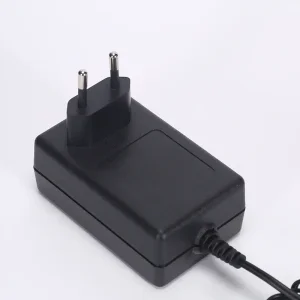
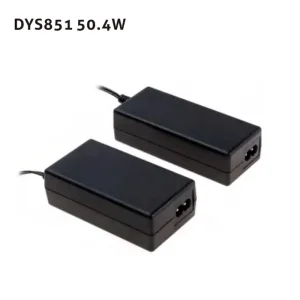
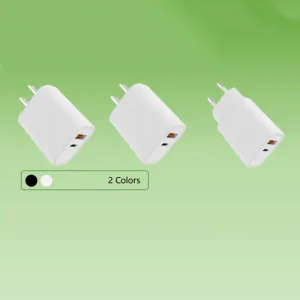
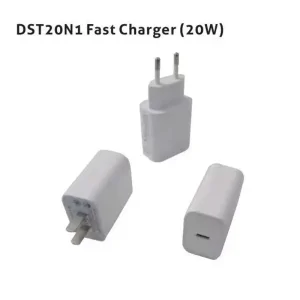
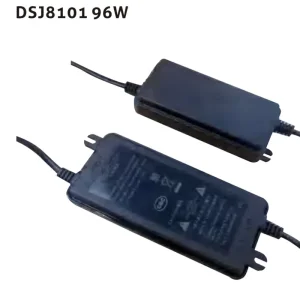
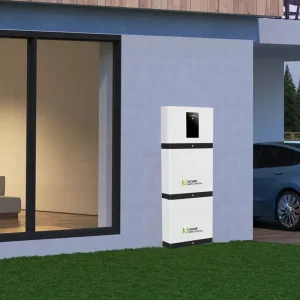
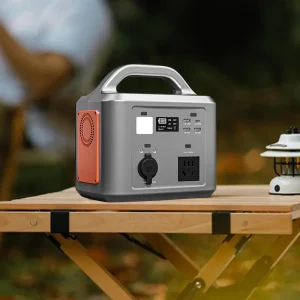
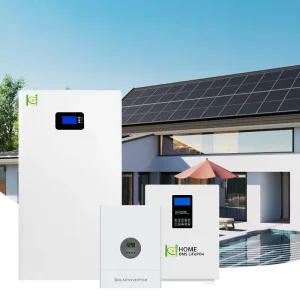
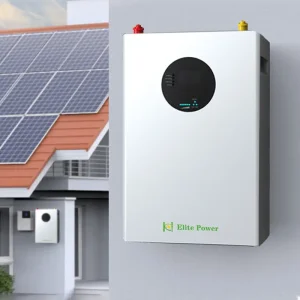
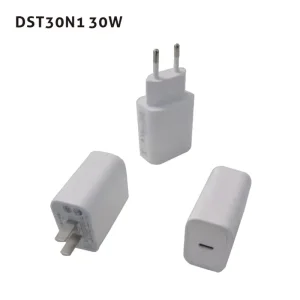
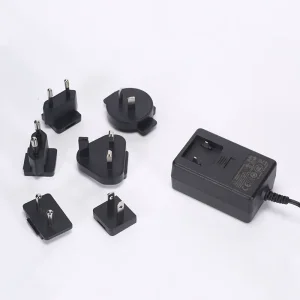
Explore our full range of solutions designed to integrate with European systems. The following products can be fully customized for industrial, medical, and residential projects in Berlin and throughout Europe.
 ELITE POWER