Engineered power and storage architectures designed to sustain commercial operations under extreme environments.

An In-Depth Whitepaper on ODM Drone Charger Innovation, Smart Battery Management (BMS) and Industrial Deployment Ecosystems.
The drone landscape has shifted dramatically from hobbyist remote-controlled flight to mission-critical industrial processes. As unmanned aerial vehicles (UAVs) become crucial components of agriculture, logistics, surveying, and defense, the limitations of traditional charging paradigms have become starkly apparent. The core barrier to scaling drone operations is no longer the airframes or flight controllers themselves; rather, it is the energy cycle—specifically charge recovery rate, thermal limits during high-rate replenishment, and lifecycle degradation of high-energy-density cells.
To address these complex challenges, Elite Power's engineering division, in alignment with our China 4.0 production hubs, has pioneered a multidimensional technology roadmap for ODM drone chargers. This roadmap is centered around four pillars:
Integrating wide-bandgap GaN switches allows for operational frequencies up to 5 times higher than silicon, shrinking device volumes by 40% while pushing thermal efficiency past 96.5%.
Our chargers interact with intelligent UAV batteries, executing dynamic, real-time current adjustments based on cell health, cycle count, temperature profiles, and internal resistance.
Utilizing phase-change material coatings alongside active liquid-cooling channels within high-output charging stations ensures components remain below safety ceilings during continuous 2C/3C cycles.
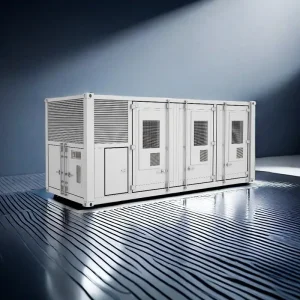
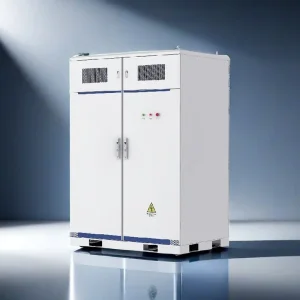
Looking to the horizon, the industry is transitioning rapidly toward automated, autonomous ground control stations (GCS) and drone-in-a-box solutions. The next-generation ODM drone battery charger is not merely an external adapter; it is an intelligent, network-managed sub-system capable of over-the-air (OTA) updates, predictive maintenance alerts, and seamless integration with clean microgrids (such as our commercial energy storage cabinets).
Industrial drone usage is not uniform; different sectors present entirely distinct operational strains. An agricultural drone operating in high-humidity spraying corridors requires fundamentally different electrical isolation and thermal dissipation compared to a defense drone operating in sub-zero alpine reconnaissance.
Certified Quality Controls
Rapid Charge Rates Supported
GaN Converter Efficiency
Field Safety Failures
As global procurement demands reliable supply lines and strict cost-efficiency, the geographical placement of R&D and production remains a key differentiator. Elite Power leverages its unique operational footprint spanning Hong Kong, Shenzhen, and Dongguan. This cluster represents the global epicenter of advanced battery chemistry, electronic component distribution, and automated manufacturing systems.
Shenzhen's rapid prototyping ecosystem allows our R&D teams to design, mill, and test custom PCB designs within days rather than weeks. Simultaneously, our Dongguan facility operates under automated Industry 4.0 manufacturing processes, including computerized Selective Soldering Systems, automated optical inspection (AOI), and multi-point functional circuit tests (FCT) under simulated load. By utilizing this infrastructure, we ensure:
Safety is paramount when charging high-capacity, high-discharge LiPo/LiFePO4 drone batteries. A charger must act as a sophisticated safety barrier, shielding the cells from fluctuations in input power, grid transients, and abnormal temperature conditions. Compliance is not a secondary checkbox; it is a fundamental design criteria.
Elite Power has built an internal regulatory compliance team focused on localized certifications worldwide. Our ODM drone charger lines comply fully with:
Our strategic partnerships (established in 2022 with prominent USA energy and optical charging companies) have honed our capability to provide localized field engineering support. We assist our clients with on-site system integration, regional regulatory filings, and training materials for ground operations crews.
When vetting an ODM manufacturer for drone battery chargers, procurement departments should evaluate candidates on engineering metrics rather than unit cost alone. Low-cost charging circuits often omit essential features:
A. Active Balancing Capabilities: Look for chargers capable of balancing cells during the bulk charge phase rather than just at the end. This reduces total charge times and prevents cell voltage divergence, which is a primary cause of drone battery fires.
B. Real-Time Communication Interfaces: Verify that the charger supports integration with your fleet's ground station software. A standard UART, CAN, or RS-485 port allowing remote monitoring of current, voltage, and temperature is critical for large-scale fleet safety.
C. Robust Thermal Dissipation: Inquire about thermal profiling and thermal imaging tests under full load. Active cooling systems must be isolated from the internal logic boards to protect delicate components from atmospheric moisture and dust.
ELITE POWER is a proud subsidiary of GRACE DEVELOPERS CO., LIMITED.
Operating from the technological centers of Hong Kong, Shenzhen, and Dongguan, China, we focus on smart, green energy storage solutions. As a modern, scientific research-led enterprise, we manage everything from early-stage conceptualization, industrial design, and advanced tooling to global distribution and certification.
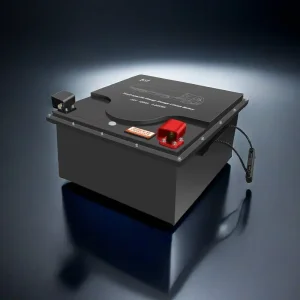
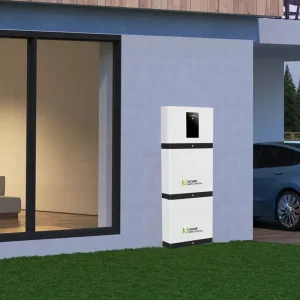
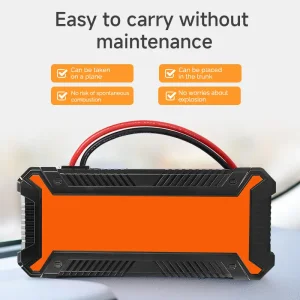
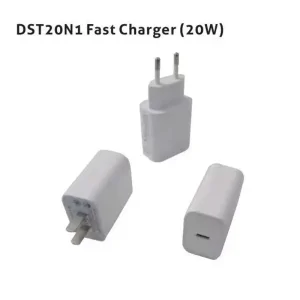
Our diverse portfolio bridges the gap between massive grid-tied solutions and micro-mobility storage, ranging from household energy storage systems and commercial-grade cabinets (215kWh) to supercapacitor jump starters, truck LiFePO4 batteries, and heavy-duty industrial drone chargers.
Our core values define our everyday operations, steering our engineering decisions and client relationship management:

Honesty, transparency, and integrity in every transaction and contract agreement.

Continually pushing boundaries of green battery and smart power technologies.

Relentless dedication to product durability and exceptional customer service.

Fostering mutual growth, collaborative design cycles, and true operational success.

Key questions answered by our Principal R&D Engineers regarding drone charging technology, customization, and thermal safety.
Our systems support multi-chemistry setups ranging from 2S to 18S configurations, primarily focusing on High-Voltage Lithium Polymer (LiHV) and Lithium Iron Phosphate (LiFePO4) chemistries. We can customize charging voltages up to 80V DC and charging currents up to 60A per channel to support high-payload configurations.
We integrate intelligent thermal throttle controls within our firmware. If the ambient temperature exceeds 45°C or internal heatsink temperatures reach a set threshold, the charging software automatically adjusts the duty cycle, gently reducing output amperage to maintain safe component operation without terminating the charge cycle.
Yes. We provide complete integration options including open APIs, serial command structures (Modbus/CAN/RS485), and physical contact plate designs that support automatic alignment tolerance, allowing robotic systems to command charging profiles autonomously.
Every custom module is engineered with Over-Voltage Protection (OVP), Over-Current Protection (OCP), Short-Circuit Protection (SCP), Reverse Polarity Protection, and dynamic cell-by-cell temperature monitoring interfaces to prevent runaway events.
Further innovations in commercial, home, and auxiliary industrial battery and charging infrastructures.
 ELITE POWER