Explore our premium grade power supply and energy storage configurations designed for global industrial deployment.
Analyzing key supply chains, strategic materials, and global manufacturing dynamics shaping tomorrow's mobility.
The global transition to electrification has accelerated the demand for high-performance Electric Vehicle Battery Packs. Commercial and industrial sectors are shifting from localized, custom-engineered prototypes to standardizing high-capacity, heavy-duty energy architectures. Today, the industrial landscape of EV battery production spans major hubs across the Asia-Pacific region, Europe, and North America. As governments introduce rigorous environmental mandates—such as the United States Inflation Reduction Act (IRA) and the European Battery Regulation—supply chain compliance, carbon tracking, and vertical integration have become critical operational metrics.
As tier-1 wholesale manufacturers, we recognize that delivering high-energy-density cells is only part of the solution. Industrial fleet buyers require holistic guarantees concerning the source of raw materials (Lithium, Iron Phosphate, Cobalt, Nickel, and Manganese), automated structural assembly, and robust thermal insulation architectures. Today's commercial EV batteries are optimized for diverse localized integration environments, requiring deep coordination between electrochemical design, high-frequency structural calculations, and regulatory safety benchmarks.
A leading new energy production enterprise combining scientific research, precision manufacturing, and strategic international partnerships.
ELITE POWER is a subsidiary of GRACE DEVELOPERS CO., LIMITED. With strategic corporate branches in Hong Kong, Shenzhen, and Dongguan, China, we operate at the heart of the world's most robust electronics and energy engineering ecosystems. As a modern, vertically integrated new energy production enterprise, we seamlessly combine advanced scientific research, custom industrial design, precision manufacturing, and global sales channels. We focus on designing, verifying, and producing intelligent, green new energy storage and motive power solutions.
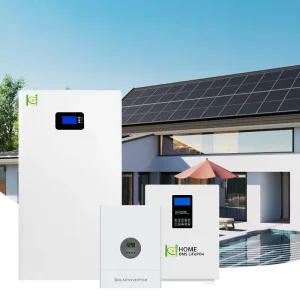
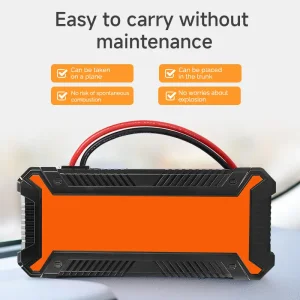
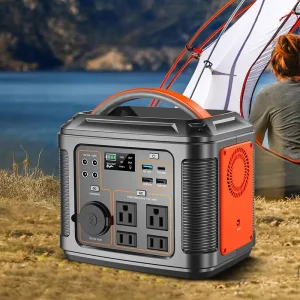
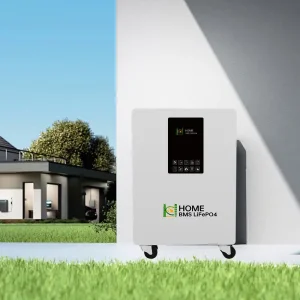
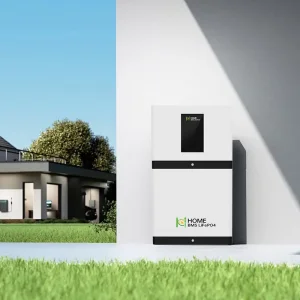
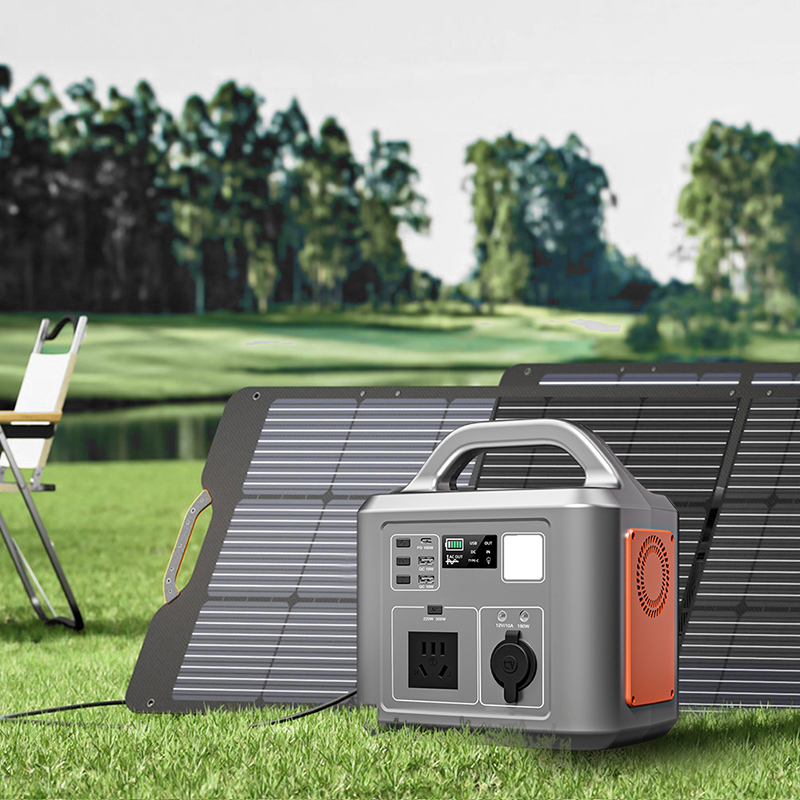
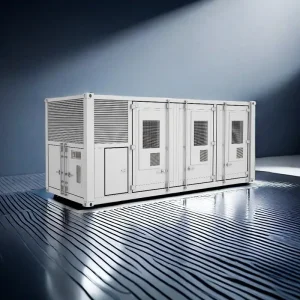
Our expansive product portfolio serves the entire energy value chain. From household energy storage systems (ESS) and industrial/commercial energy storage cabinets to massive multi-megawatt energy storage containers, supercapacitor car starters, lightweight portable power stations, heavy-duty truck LiFePO4 stop-and-exchange batteries, and furniture battery systems—we provide standard and customized designs tailored to global operational environments.
In 2022, we solidified our international footprint by signing a long-term strategic cooperation agreement with partners in the United States. This partnership focuses on co-developing state-of-the-art optical storage and charging systems for North American commercial infrastructure, supplying residential energy storage, and introducing heavy truck parking batteries engineered for extreme long-haul applications and quick-swap transport hubs.

We operate with absolute honesty, transparency, and traceability across all aspects of our global supply chain.

Committed to advancing cell architecture and intelligent software to accelerate clean, renewable energy transition.

We pursue perfection, from cell validation and BMS programming to ruggedized mechanical assembly and global delivery.

Our global partnership networks operate on shared growth, comprehensive technical support, and structural engineering alignment.
Tracing the evolution of battery chemistry, system topologies, and advanced software systems over the next decade.
Standard liquid electrolytes are gradually reaching their absolute energy ceiling. ELITE POWER's R&D monitors and drives research in solid-state and semi-solid-state designs. Eliminating volatile organic liquid solvents significantly mitigates the risk of thermal runaway, enabling the incorporation of pure lithium metal anodes. This shift is projected to push system energy density to over 400 Wh/kg, paving the way for ultra-safe, high-range industrial vehicle deployments.
Traditional battery architectures rely on modules nested inside bulk casing, adding unnecessary weight and thermal barriers. By integrating advanced cell-to-pack (CTP) designs, individual cells are consolidated directly into a robust structural outer framework. This dramatically increases the pack volumetric utilization rate from 50% to roughly 65%. The design also simplifies mechanical complexity and reduces manufacturing costs while providing superior structural safety.
Future battery safety and optimization rely heavily on active digital intelligence. Modern Battery Management Systems (BMS) integrate machine learning algorithms to evaluate real-time health (State of Health - SoH), internal resistance variations, and cell degradation paths. Cloud-integrated digital twin monitoring systems allow fleet operators to predict thermal irregularities up to 24 hours before they manifest, providing unmatched security and reliability.
The global EV industry is transitioning rapidly from standard 400-volt battery layouts to 800-volt architectures. The primary driver is the need to minimize charging times while lowering overall system current, which reduces thermal output. Under an 800V system, heavy-duty commercial fleets and delivery vehicles can achieve a 10% to 80% charge in under 15 minutes. This shift requires sophisticated cell-to-cell thermal management, high-performance liquid cooling systems, and extremely low-resistance busbars to control the elevated electrical current during fast-charging sessions.
Providing robust electrical and thermal engineering frameworks to support diverse heavy-duty applications worldwide.
Moving large-scale logistics fleets to electric powertrains requires high-cycle battery durability and resilient charging architectures. ELITE POWER specializes in heavy vehicle applications, offering high-capacity, heavy-duty battery packs that integrate with automatic swap systems. This design is highly valuable for regional haul trucking, mining machines, and city transit vehicles, where minimizing downtime is critical for profitability.
Additionally, our strategic partnership in the USA leverages specialized designs for heavy-duty truck stop-and-exchange battery packs, maintaining stable internal temperatures even under continuous high-load demand. By employing robust mechanical structural systems, our batteries protect delicate cells against extreme shock, drop impacts, and environmental conditions common in long-haul shipping routes.
Addressing the complex technical requirements of varied operating climates and structural environments.
Lithium-ion chemistries experience slowed chemical reaction kinetics when exposed to sub-zero climates, causing drop-offs in discharge capacity and slow, unsafe charging speeds. To address this, ELITE POWER incorporates smart PTC heater elements and insulated thermal blankets within the battery packs. This system uses minimal energy to pre-warm cells up to their optimal operating range before charging begins, ensuring full power delivery even in northern climates.
Off-road transport, heavy agricultural machinery, and heavy mining vehicles subject battery systems to continuous mechanical vibration. Our engineering team addresses this by enclosing individual cells in high-strength, structural honeycomb cases and securing them with aerospace-grade silicone adhesives. This structure prevents micro-fracturing along electrical connections, ensuring consistent energy output under severe terrain conditions.
Sustainable engineering requires designing for product life cycles beyond initial vehicle use. When an EV battery pack's capacity drops to around 80% of its original rating, it is no longer optimal for driving range requirements. However, these batteries are highly valuable for stationary energy storage systems (BESS). ELITE POWER designs structural packs with modular dismantling and second-life applications in mind. This allows used cells to transition smoothly into grid peak-shaving systems, commercial building backups, or renewable energy storage fields, lowering the lifetime cost of ownership for fleet operators.
In-depth responses to critical design, safety, and integration questions for industrial battery projects.
Explore our industrial energy storage solutions and fast-charging hardware built for utility, logistics, and residential applications.
 ELITE POWER