Direct supply channel from certified factories. Fully compliant with international safety and performance criteria.
ELITE POWER, a subsidiary of GRACE DEVELOPERS CO., LIMITED, stands as a top-tier global enterprise specializing in the integration of scientific research, custom design, manufacturing, and distribution of premium clean energy products. With corporate branches in Hong Kong, Shenzhen, and Dongguan, we are situated at the epicenter of electrical engineering innovation.
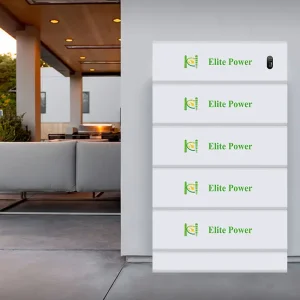
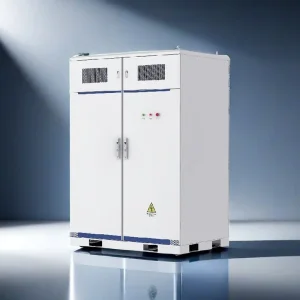
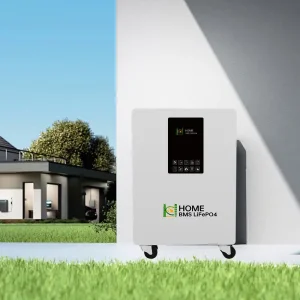
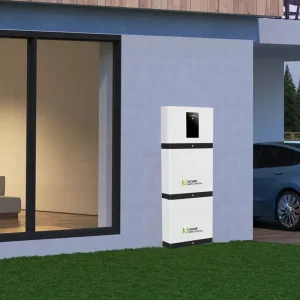
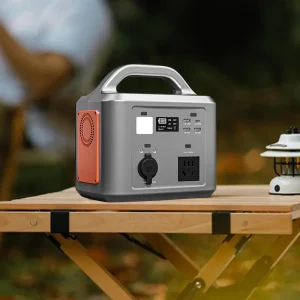
We are dedicated to providing global markets with comprehensive, cutting-edge new energy solutions. Our extensive production portfolio spans home battery configurations, commercial and industrial (C&I) energy storage cabinets, transportable energy containers, truck starting batteries, furniture smart-power packs, and specialized electric vehicle infrastructure products—specifically our internationally recognized Type 2 Charging Cables.

Understanding the standard transition of Type 2 (IEC 62196-2) interface protocols within the global EV fleet matrix.
The transition toward electric transport has accelerated the demand for standardized, safe, and highly efficient charging interfaces. The Type 2 charging connector (Mennekes standard/IEC 62196-2) has emerged as the definitive charging interface across Europe, Asia-Pacific, and increasingly, as an alternative global protocol for multi-region fleet configurations. Because AC power grids fluctuate drastically between geographical territories, industrial buyers require charging cables engineered to support single-phase and three-phase power delivery configurations without performance decay.
Standardized under IEC 62196-2, Type 2 is the mandated standard for AC charging stations within the EEA. It accommodates three-phase power up to 22 kW, rendering it the optimal choice for commercial hubs and municipal public charging infrastructures.
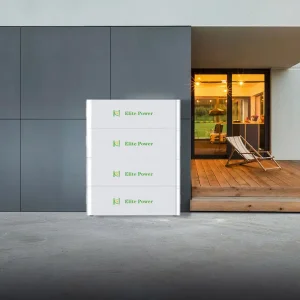
Our Type 2 solutions are optimized to integrate dynamically with stackable home energy storage systems and high-capacity microgrids, bridging the gap between local solar accumulation and EV battery integration.
Equipped with sub-millisecond thermal sensors inside the plug. Built to preemptively stop power transmission if temperatures rise due to worn contact terminals in legacy wallboxes.
A look at the mechanical structure and material configuration of our high-amperage Type 2 cables.
For wholesale buyers, procurement managers, and CPT operators, selecting a Type 2 charging cable relies heavily on material science. A standard cable will experience physical deterioration, UV discoloration, chemical corrosion from vehicle fluids, and physical damage from being run over. To address these issues, ELITE POWER incorporates advanced TPU/TPE formulations along with silver-plated copper alloy pins to lower contact resistance and prolong product lifespan.
| Technical Parameter | Single-Phase Specification | Three-Phase Specification | Industrial High-Amperage Spec |
|---|---|---|---|
| Rated Current Options | 16A or 32A | 16A or 32A | 32A to 64A (Heavy Utility) |
| Voltage Capacity | 230V AC (Nominal) | 400V - 480V AC | Up to 480V AC Continuous |
| Maximum Power Yield | 3.7 kW - 7.4 kW | 11 kW - 22 kW | 22 kW - 30 kW (Optimized) |
| Cable Jacket Material | High-Elasticity TPE | Flame-Retardant Pur-TPU | Heavy-Duty Thermoplastic Polyurethane |
| Contact Resistance | ≤ 0.5m Ω | ≤ 0.5m Ω | ≤ 0.3m Ω (Silver Plated) |
| Flame Retardant Class | UL94 V-0 | UL94 V-0 | UL94 V-0 |
| IK Protection Level | IK08 (Impact Resistant) | IK10 (Reinforced) | IK10+ (Drive-over Proof) |
Standard PVC-jacketed cables tend to stiffen and crack in sub-zero environments. Our production lines use a premium formulation of Thermoplastic Polyurethane (TPU), which retains high levels of flexibility even at temperatures as low as -40°C, and offers excellent ozone and abrasion resistance.
The connector shell is built from a high-impact polycarbonate compound with glass fiber reinforcement, engineered to survive accidental drops from heights of over two meters and vehicle rollover weights exceeding 2.5 metric tons.
Cheap copper terminals degrade and oxidize quickly under repeated high-current thermal stress. Our factories apply a premium silver plating coating onto the high-conductivity copper alloy terminals.
This lowers electrical contact resistance, prevents thermal buildup during extended charging sessions, and protects the pins from atmospheric humidity and salt spray corrosion in coastal environments.
A strategic look at our global operation networks, engineering standards, and shared core beliefs.
Operating as a key subsidiary of GRACE DEVELOPERS CO., LIMITED, we are committed to building long-term, mutually beneficial relationships with our distributors, OEMs, and charging network operators. Our manufacturing operations run in strict compliance with the ISO 9001:2015 Quality Management System and ISO 14001:2015 Environmental Management System, ensuring every cable meets the highest standards of reliability and safety.
We build long-term relationships through transparent business practices, clear lead times, and reliable technical parameters. We ensure our materials are ethically sourced and meet all stated specifications.
We are constantly refining our designs to improve efficiency and longevity. This includes upgrading our liquid cooling systems, integrating advanced microgrids, and improving the safety mechanisms of our Type 2 connectors.
From early prototype development and testing to final batch packaging and customs logistics, our teams work closely together to ensure high product quality and timely customer service.
We work closely with our global partners to build profitable distribution networks, helping scale green energy solutions across North American, European, and regional charging networks.
How our heavy-duty charging cables fit into commercial fleet systems and public spaces.
Built to handle the physical wear and tear of public charging stations. Our cables feature high UV resistance and robust protection against weather and accidental drive-overs, ensuring reliable performance in commercial hubs.
Our Type 2 charging cables connect directly to our modular battery cabinets, allowing business parks and logistics complexes to charge their fleets using clean energy stored from local solar arrays.
Optimized for commercial fleets and delivery networks. Designed for fast charging cycles, high-frequency use, and long-term durability in loading bays, distribution centers, and fleet depots.
Developing faster, smarter, and more integrated EV charging systems for future energy grids.
The EV industry is shifting toward higher charging speeds and smart grid integration. Our engineering team is currently developing next-generation Type 2 connection components, focusing on bidirectional power flow (V2G/V2H) and advanced thermal management to support high-power AC and DC charging systems.
Designing new contact arrays and signal lines to support vehicle-to-grid (V2G) systems, allowing electric vehicle fleets to feed stored energy back into local grids during peak demand hours.
Testing plant-based thermoplastic urethanes to replace petroleum-based cable jackets, helping reduce the environmental footprint of our products while maintaining robust mechanical performance.
Developing smart connectors equipped with embedded microchips to track terminal wear, plug cycles, and real-time resistance, notifying operators of potential maintenance needs before failure occurs.
Providing technical answers to common queries for procurement teams and project managers.
The primary differences lie in current-carrying capacity, conductor thickness, and weight. A 16A three-phase cable delivers up to 11 kW of power, while a 32A three-phase cable delivers up to 22 kW. 32A cables require larger copper conductors (typically 6mm² for phase lines compared to 2.5mm² for 16A cables), making them slightly heavier and stiffer, but they offer faster charging times for vehicles equipped with onboard chargers that support higher AC inputs.
Yes. A three-phase Type 2 cable is backward compatible with single-phase charging systems. The onboard system and charging station will auto-negotiate power delivery, routing current through the single active phase (L1) while leaving L2 and L3 inactive. This ensures safe charging operations across different types of infrastructure.
TPU (Thermoplastic Polyurethane) offers significant performance advantages over PVC (Polyvinyl Chloride) for outdoor charging. TPU retains high flexibility at low temperatures (down to -40°C), whereas PVC tends to stiffen and become brittle. Additionally, TPU features superior resistance to ozone, mechanical wear, drag abrasion, and chemical exposure from vehicle fluids, resulting in a longer operational lifespan.
Our products undergo a rigorous testing process, including high-voltage insulation tests, flex life tests (exceeding 10,000 mating cycles), impact tests, mechanical load tests, and thermal aging tests. Our manufacturing facilities operate in compliance with ISO 9001:2015 and ISO 14001:2015, and our products carry standard certifications (such as CE, TUV, and RoHS) for global distribution.
Yes, we provide full OEM and ODM services. We can customize cable lengths (such as 5m, 7.5m, or 10m options), modify housing colors, print custom brand logos, and adapt connector shapes to meet your specific project requirements and technical standards.
Explore our wider range of high-capacity energy storage systems and electrical accessories.
 ELITE POWER