In an increasingly complex and hardware-diverse workplace, the management of device power systems has escalated from a trivial IT utility consideration to a strategic operational factor. Modern enterprises find themselves operating a heterogenous fleet of hardware, ranging from lightweight ultra-portable administrative notebooks and premium corporate workstations to rugged medical computing terminals and precision testing field equipment. Historically, managing this array of equipment necessitated maintaining an expensive, vulnerable, and resource-intensive inventory of proprietary, single-device AC adapters.
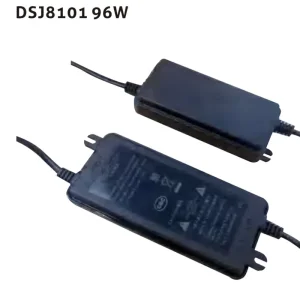
This fragmentation represents a major challenge for logistics management, causing inventory inflation, accelerating electronic waste output, and lowering overall operating efficiency. The transition to standard universal USB-PD (Universal Serial Bus Power Delivery) architectures has solved this complexity. Today's commercial universal power supplies are not just adaptors; they are complex, micro-controlled power systems engineered to deliver safe, dynamic charging across distinct operational platforms.
"Universal power standardisation is no longer a design preference—it is a critical requirement for corporate cost-reduction, circular economy compliance, and global logistical continuity."
The technology roadmap for high-power universal laptop chargers is driven by two parallel advancements: Wide-Bandgap (WBG) semiconductors—primarily Gallium Nitride (GaN)—and the extension of the USB-PD 3.1 protocol framework.
Gallium Nitride (GaN) Integration (Gen III/IV): Unlike traditional silicon-based transistors, GaN features a significantly wider bandgap (3.4 eV compared to Silicon's 1.1 eV). This allows GaN to withstand higher voltage levels and operate at faster switching frequencies. The result is a dramatic reduction in passive component size (inductors, capacitors, and transformers) and a notable boost in efficiency—often exceeding 95% at full load. In industrial applications, this keeps charging hardware cool, highly compact, and remarkably power-dense (reaching up to 24W per cubic inch).
Supports Extended Power Range voltages up to 48V at 5A, comfortably powering high-performance laptops and mobile workstations.
Continuous dynamic thermal monitoring adjusts real-time power profiles to prevent component degradation.
Smart MCU resource allocation balances output across multi-port interfaces without dropping active device sessions.
Adaptive Programmable Power Supply (PPS): Universal chargers operate on micro-step communication loops with the client device's battery management system (BMS). Using PPS, the power supply dynamically adjusts output voltage in increments as small as 20mV and current by 50mA steps, reducing converter loss and heat build-up inside the laptop itself.
Operating across prime manufacturing zones in Hong Kong, Shenzhen, and Dongguan, our production ecosystem represents modern Factory 4.0 manufacturing. Through our parent network, ELITE POWER (a division of GRACE DEVELOPERS CO., LIMITED), we run high-capacity facilities engineered for both custom ODM runs and massive OEM supply operations.
Our manufacturing system is built on data-integrated SMT (Surface Mount Technology) placement machines, automated optical inspection (AOI) lines, and computerized ATE (Automatic Test Equipment) frameworks. Every power supply goes through stress tests under full electrical loads inside temperature-regulated burn-in rooms to confirm that early component failure rates stay near zero.
By consolidating component sourcing, magnetic core development, and housing molding under a unified supply management workflow, we protect our clients from global component shortages. This helps ensure consistent product quality, stable pricing models, and reliable delivery schedules even during market fluctuations.
Compliance in power electronics is non-negotiable. An uncertified power adapter poses significant liability risks, including electromagnetic interference, power grid feedback distortion, and electrical fire hazards. ELITE POWER ensures that all universal laptop chargers meet and exceed rigorous international regulatory standards.
Our designs undergo complete external testing at certified laboratories to secure global compliance, including UL/cUL (North America), CE (Europe), FCC, RoHS, PSE (Japan), CCC (China), and CB scheme certifications. This allows seamless integration into diverse commercial ecosystems around the world.
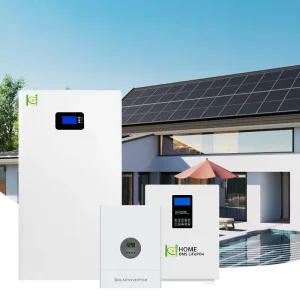
In 2022, we signed a strategic cooperation agreement with USA partners to expand the optical storage, home energy storage, and industrial charging markets. This partnership has strengthened our technical compliance in heavy-vehicle parking systems, dynamic starter adapters, and emergency activation technologies, ensuring our designs align with local grid rules and environmental standards.
For large organizations, school districts, healthcare networks, and government departments, managing IT charging solutions can be complex and expensive. Standardizing device fleets with a high-capacity universal charger solution provides immediate benefits:
When sourcing bulk quantities of universal laptop chargers, global procurement teams must look beyond unit price to mitigate system integration risks:
ELITE POWER is a subsidiary of GRACE DEVELOPERS CO., LIMITED. With branch operations in Hong Kong, Shenzhen, and Dongguan, China, we operate as a modern energy technology enterprise combining scientific research, structural design, manufacturing, and international sales.
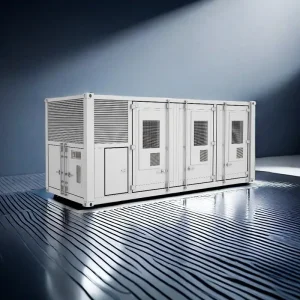
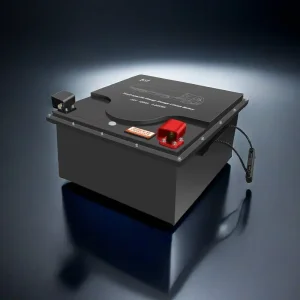
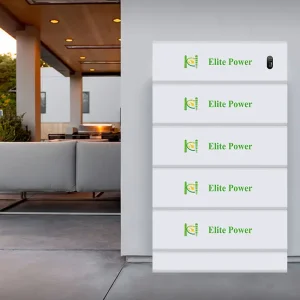
We focus on intelligent green power and energy storage solutions. Our product range includes home energy storage systems, industrial and commercial energy storage cabinets, modular energy storage containers, supercapacitor jump starters, portable power stations, truck lithium batteries, and smart home furniture battery packs.



By connecting scientific innovation with rigorous quality management, ELITE POWER designs high-efficiency systems for demanding applications worldwide. Our partnerships, including joint developments in the US market, reflect our commitment to performance, reliability, and support.
 ELITE POWER